
Strict clover
Trifolium strictum
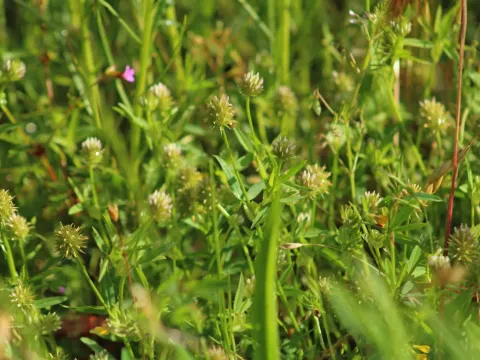
Strict clover (Trifolium strictum) is an annual legume species that features an upright stem structure. In agricultural practice, the sowing period is primarily determined by local climate patterns and soil moisture levels.
What the section contains
Strict clover
The optimal time for sowing is early spring, once the soil has warmed to a temperature of 8-10 degrees Celsius. Providing consistent moisture during the germination phase is essential for establishing a uniform stand.
Sowing depth should be kept shallow, typically between 1 to 2 centimeters, to ensure proper contact with the soil while allowing the small seeds to emerge efficiently.
The seeding rate varies based on the intended use, whether for grazing, hay production, or as a cover crop. It is often sown in mixtures with grasses to improve forage quality and balance.
In regions with mild, Mediterranean-like winters, late autumn sowing can be a successful strategy, allowing seedlings to establish roots and utilize winter moisture for vigorous spring growth.
This crop thrives in moderately moist, sandy or loamy soils. It prefers a neutral to slightly acidic pH level and requires good drainage, as waterlogged conditions can lead to root issues.
Strict clover demands high levels of sunlight to reach its full potential. Areas with significant shading should be avoided, as restricted light negatively impacts biomass production and seed set.
Although it exhibits better drought tolerance than many other Trifolium species, regular irrigation during the budding phase is recommended to maximize the yield of green biomass.
While the plant is effective at fixing atmospheric nitrogen, a baseline application of phosphorus and potassium fertilizers can significantly enhance root architecture and overall plant vigor.
The temperature range of 18-25 degrees Celsius is considered ideal for the physiological processes of the plant during the main vegetative growth stage.
The biomass yield of strict clover is largely dependent on soil fertility and appropriate management practices. The plant is highly valued for its high protein content in green fodder.
Due to its upright growth habit, Trifolium strictum is well-suited for mechanical harvesting. This feature increases the efficiency of forage collection and reduces labor requirements.
Under optimal conditions, the crop produces a dense canopy that can support multiple cuts during a single growing season. This contributes significantly to the total forage output.
Seed production is generally reliable, although it requires favorable weather during the maturation period. Proper handling during harvesting is necessary to prevent seed shattering.
As a legume, strict clover acts as a vital component in crop rotation schemes, leaving significant amounts of organic nitrogen in the soil, which benefits the succeeding cereal crops.
Fungal diseases, especially those thrive in humid environments, represent the most common threat to strict clover stands. Maintaining adequate airflow through the canopy is a primary preventive measure.
Pests such as clover weevils can damage foliage and developing seeds. Integrated pest management, including monitoring and timely application of bio-insecticides, is effective in controlling outbreaks.
Weeds can be highly competitive during the early seedling stage. Shallow cultivation or rotary hoeing is recommended to suppress weed growth until the clover stand closes the canopy.
Nematode infestations, while less common, can compromise the root system and reduce overall plant productivity. Adherence to a strict crop rotation cycle is the best defense against soil-borne issues.
Using certified, healthy seed and cleaning machinery before entering a field are key practices to prevent the introduction of pathogens and invasive weeds.
Harvesting for forage should occur during the full bloom phase, when the plant's nutritional profile is at its peak. This ensures the highest quality feed for livestock consumption.
For hay production, the use of a mower-conditioner is advised to speed up the drying process. Careful handling is necessary to retain leaves, which are the most nutrient-dense part of the plant.
Seed harvesting should be timed carefully when the majority of the seed heads have matured but before widespread shattering occurs. Harvesting in cooler parts of the day can help minimize losses.
Post-harvest management involves cleaning and drying the seeds to a moisture level that ensures stability during storage. Proper drying prevents heating and degradation of seed viability.
Seed should be stored in a cool, dry, and well-ventilated facility to maintain high germination rates for the following planting cycle.