
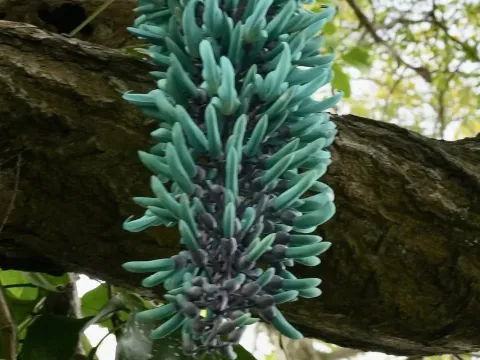
Strongylodon
Strongylodon
Propagation of Strongylodon is typically achieved through seeds, which should be sown immediately after harvest to maximize their limited viability period.
What the section contains


Strongylodon
Seed coats are very hard, so scarification is necessary to allow moisture to enter and trigger germination, significantly increasing success rates.
A well-draining, nutrient-rich substrate composed of peat and perlite provides the ideal environment for the developing radicle of the emerging seedling.
Seedlings require a consistent temperature of around 25-27 degrees Celsius, along with high humidity levels to prevent dehydration during the initial growth phase.
Once seedlings develop several true leaves, they must be carefully transplanted into larger containers to prevent root binding, which can stunt the growth of the vine.
Strongylodon belongs to the Fabaceae family and is native to the tropical rainforests of the Philippines, requiring specific environmental conditions to thrive.
This vigorous climber demands large structures for support, as its stems can reach remarkable lengths and require substantial anchorage in stable soil.
The plant is strictly tropical, meaning it cannot tolerate temperatures below 18 degrees Celsius, making it suitable only for greenhouses or conservatories in temperate zones.
Maintaining high ambient humidity is crucial for the health of the foliage and the development of the iconic pendant inflorescences characteristic of the genus.
The soil pH should be slightly acidic to neutral, and the growing medium must be highly porous to ensure that oxygen reaches the roots effectively at all times.
Spider mites are the most persistent pest for Strongylodon, particularly in indoor environments where the air may become excessively dry for the plant's needs.
Mealybugs can also infest the stems and leaves, causing sap depletion and potentially spreading secondary fungal infections throughout the plant canopy.
Root rot is a major threat caused by overwatering or poor drainage, which creates an anaerobic environment favorable for the proliferation of pathogenic fungi.
Regular monitoring of the foliage and the application of mild horticultural oils can help manage pest populations without damaging the delicate vine tissues.
Providing adequate ventilation is essential to discourage the development of mildew and other moisture-related diseases that can compromise the plant's structural integrity.
The harvest of Strongylodon seeds involves collecting the large legume-like pods as soon as they reach maturity, signaled by a change in their external texture.
Timing is critical as the pods naturally dehisce, or split open, to release seeds, which can lead to rapid loss of the crop if not monitored daily.
Once collected, seeds are separated from the pod husks and allowed to air-dry slightly in a shaded area to prevent fungal growth during short-term storage.
Seed quality should be assessed immediately, discarding any damaged or underdeveloped seeds that show signs of pest infestation or disease markers.
Due to the recalcitrant nature of these seeds, they are rarely stored long-term and are usually distributed directly to nurseries or botanical garden collections.