
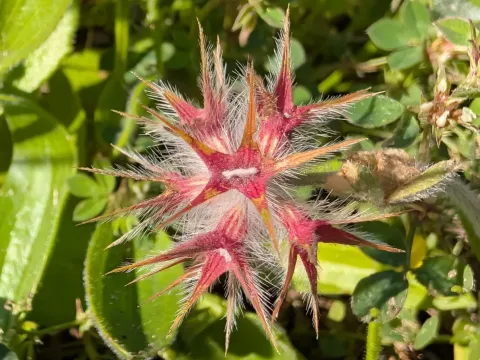
Starry clover
Trifolium stellatum
Starry clover is an annual herbaceous plant belonging to the Fabaceae family. Sowing is typically scheduled for the early spring once the soil temperature consistently reaches 10–12 degrees Celsius.
What the section contains
Starry clover
In Mediterranean-type climates, autumn or late winter sowing is common, allowing the plants to establish before the onset of the heat, which ensures better biomass development.
The seeds should be planted at a shallow depth of 1–2 centimeters, ensuring they remain in contact with the moisture-retaining soil surface while receiving enough light to trigger germination.
Seeding rates are calculated based on the intended use, with higher densities required for fodder production and lower densities for seed multiplication purposes.
Standard row sowing methods with spacings of 15–20 centimeters are recommended to facilitate adequate air circulation and simplify weeding operations if necessary.
This species thrives in open, sunny environments where it can maximize its growth cycle. It is highly valued for its drought tolerance once established in the field.
The plant performs best in light-textured soils, including sandy loams and well-drained loams, as it is sensitive to waterlogged conditions that can inhibit root development.
Starry clover prefers neutral to slightly alkaline soil conditions and is well-adapted to poor soils where it helps improve nitrogen levels through symbiotic fixation.
It has a moderate requirement for micronutrients, specifically phosphorus and potassium, which should be available to ensure robust blooming and seed set.
The plant’s temperature tolerance is relatively high, making it a reliable choice for regions with warm, dry summers and mild winters where other legumes might struggle.
Powdery mildew is the most frequent disease affecting Starry clover, particularly during periods of high humidity and poor ventilation within the crop canopy.
Root rot pathogens can cause significant damage in poorly drained fields, leading to premature wilting and patches of sparse growth throughout the plot.
Insect pests, specifically clover root weevils, pose a constant threat to seedling development and should be monitored closely during the early growth stages.
Aphid populations may build up during the flowering phase, potentially causing malformation of the starry-shaped calyces and reducing overall seed viability.
Preventive measures include crop rotation, avoiding over-irrigation, and maintaining clean fields to reduce the pressure from common leguminous pests and diseases.