
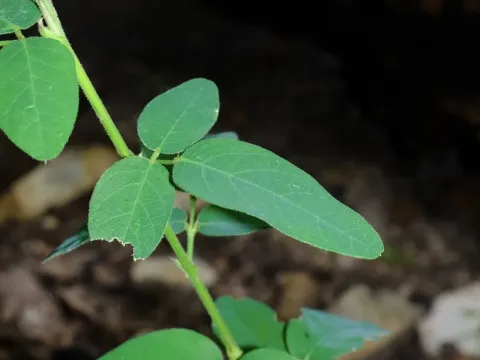
Stiff tick-trefoil
Desmodium obtusum
Stiff tick-trefoil (Desmodium obtusum) is a herbaceous perennial plant belonging to the Fabaceae family. It is widely recognized for its ecological importance and its role as a nitrogen-fixing legume in diverse ecosystems.
What the section contains
Stiff tick-trefoil
Native to North America, this plant is primarily found in open woodlands, prairies, and disturbed soils. It is well-adapted to varied soil types, ranging from sandy loam to clay, provided that the soil maintains good drainage.
The plant exhibits distinct botanical characteristics, including trifoliate leaves with relatively blunt leaflets, from which its specific epithet is derived. It produces small, pea-like flowers that attract various pollinators.
Agronomically, it requires full to partial sun exposure to maximize photosynthetic activity and biomass production. It demonstrates moderate drought tolerance once established, making it a resilient component of natural pastures.
In agricultural settings, it is often utilized to enhance forage quality. As a member of the bean family, it contributes significantly to soil health by replenishing nitrogen levels, which benefits subsequent crop rotations.
Fungal pathogens such as leaf spot diseases represent a primary threat, particularly in humid or stagnant air environments. Adequate spacing and ventilation are critical management strategies to mitigate these issues.
Pests such as aphids and leaf-eating beetles can compromise the plant's structural integrity. Regular field scouting is recommended to determine if chemical or biological control measures are necessary.
Weed competition is a significant factor during the establishment phase. Because of its relatively slow initial growth, the crop must be protected from aggressive invasive grasses until the root system is fully developed.
Overgrazing poses a major threat to the persistence of Desmodium obtusum in pasture systems. Farmers should implement rotational grazing practices to allow for adequate recovery periods and regrowth.
Root rot fungi can affect the population density if soil moisture levels remain consistently too high. Improving field drainage is an effective way to minimize the risks associated with soil-borne diseases.