
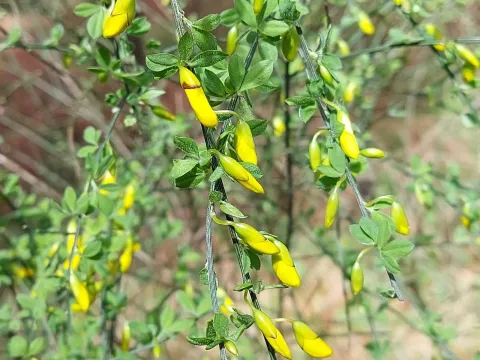
Striped broom
Cytisus striatus
Striped broom, or Cytisus striatus, is a perennial shrub belonging to the Fabaceae family, often cultivated for soil stabilization and ornamental purposes.
What the section contains
Striped broom
Seed sowing is best performed in the spring season when the soil temperature consistently reaches at least 10–12 degrees Celsius to support germination.
To improve the germination rate, it is highly recommended to stratify the seeds in a cool, moist environment for several weeks before planting them.
Seeds should be sown in shallow rows, covered with a thin layer of soil, and kept moist but not waterlogged to ensure successful seedling emergence.
Vegetative propagation via cuttings is also a viable method; cuttings should be taken in late summer and rooted in a lightweight, well-draining substrate.
This species thrives in sunny locations, as exposure to direct sunlight is crucial for achieving dense foliage and a profusion of flowers.
The plant is highly adaptable to poor-quality soils, including sandy or rocky terrains, provided that the drainage remains excellent throughout the year.
While mature plants are significantly drought-tolerant, young specimens require consistent irrigation during their first growing season to establish roots.
In temperate climates, it is essential to protect young shrubs from severe winter frost by using breathable mulching or protective covers.
Soil pH should ideally be neutral or slightly acidic, as the plant can struggle in highly alkaline conditions which hinder nutrient uptake.
The productive value of striped broom lies in its ability to improve soil health by fixing atmospheric nitrogen through root nodule bacteria.
In apiculture, the plant serves as a vital nectar source, attracting pollinators and thereby supporting the biodiversity of the agricultural area.
While not a traditional food crop, its biomass is effectively used in soil conservation efforts to prevent erosion on sloped and degraded land.
The aesthetic yield of the shrub is maximized through proper pruning, which encourages fresh growth and vibrant flowering in the subsequent seasons.
Used as an ornamental or ecological component, it contributes to the overall stability and fertility of the landscape over many years.
Fungal infections, particularly powdery mildew, are the most frequent health issues occurring in conditions of high humidity and poor air circulation.
Aphids and spider mites are common pests that target the tender tips of the broom, potentially causing leaf curling and reduced plant vigor.
Regular monitoring for pest activity allows for timely intervention using appropriate systemic insecticides or targeted organic sprays.
To prevent disease spread, it is crucial to ensure proper plant spacing and to remove any debris or diseased foliage from the base of the shrub.
Proper pruning techniques are essential not only for plant shape but also for maintaining a healthy structure that is resistant to environmental stresses.
Seed harvesting should be undertaken when the pods turn brown and begin to dry, indicating that the seeds inside are fully mature.
Due to the explosive dehiscence of the pods, it is advisable to bag the stems or harvest frequently to prevent seed loss across the field.
Once harvested, the seed material should be dried in a well-ventilated area before being stored in cool, dark conditions for future planting.
Pruning for maintenance or aesthetic purposes is best performed immediately after the flowering season to allow the plant to recover and set buds.
The removed branches and clippings can be repurposed as high-quality organic mulch, providing nutrients back to the surrounding soil.