
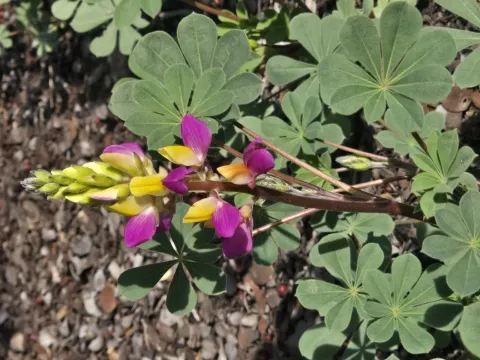
Stivers' lupine
Lupinus stiversii
Stivers' lupine (Lupinus stiversii) is an annual herb within the Fabaceae family. Native to the foothills of the Sierra Nevada mountains in California, it is well-known for its vibrant yellow and pink pea-like flowers that bloom in late spring.
What the section contains
Stivers' lupine
The plant thrives in well-drained, sandy or gravelly soils found on open slopes. It demands full sun exposure and is highly susceptible to root damage if the soil remains waterlogged, which is a common failure point in cultivation.
In terms of climatic conditions, Stivers' lupine is adapted to the Mediterranean climate, characterized by mild, wet winters and long, hot, dry summers. It does not require intensive fertilization, as it fixes nitrogen through symbiotic soil bacteria.
Botanically, the species is distinguished by its palmate leaves and specific flowering structures that attract native pollinators. Its robust taproot system allows it to compete effectively in its natural habitat by accessing deep soil moisture.
Economically, this lupine is utilized primarily for ornamental purposes and native plant restoration. It is not considered a traditional agricultural crop for human or animal consumption due to its chemical profile and limited biomass production.
Root rot is the primary threat to the health of Stivers' lupine. Excessive moisture, especially in poorly drained soils, creates ideal conditions for fungal pathogens that quickly compromise the plant's root system.
Aphids represent the most common pest, as they tend to congregate on the succulent parts of the plant, including stems and flower buds. This infestation can hinder normal growth and cause premature wilting of the floral display.
Powdery mildew is another significant issue, especially during periods of high humidity or in environments with poor air circulation. Proper spacing between individual plants is essential to mitigate the risk of fungal spread.
Seed-feeding insects, such as various types of weevils, can significantly reduce the viability of seed production. Farmers or gardeners collecting seeds must monitor pods closely as they mature to avoid heavy losses.
Herbivory from wild animals can be problematic for seedlings. In large-scale restoration projects or open fields, temporary protection for young plants is often necessary to ensure successful establishment and flowering.