
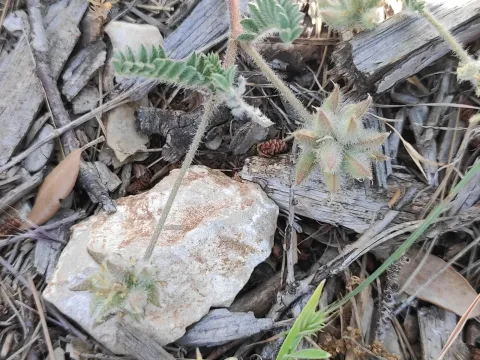
Star milkvetch
Astragalus stella
Star milkvetch (Astragalus stella) is an annual herbaceous plant belonging to the Fabaceae family. This drought-tolerant crop is native to the Mediterranean region and the Middle East, where it thrives in arid environments.
What the section contains
Star milkvetch
Sowing should be carried out in early spring once the soil temperature consistently reaches 10–12 degrees Celsius. The seeds have a hard seed coat, making mechanical or chemical scarification necessary to ensure uniform and rapid germination.
The optimal seeding depth is between 2 and 3 centimeters, depending on the soil texture. Achieving the correct plant density is crucial for maximizing biomass production, and seeding rates should be adjusted based on seed quality.
The plant exhibits rapid early development when provided with sufficient sunlight. Avoiding overcrowding is essential, as excessive competition for nutrients and water can significantly hinder the initial growth stages of the crop.
As a legume, Star milkvetch is an excellent candidate for crop rotation systems due to its nitrogen-fixing capabilities. By enriching the soil with organic nitrogen, it improves the fertility and structure of the land for subsequent cereal crops.
This species is highly adaptable, growing well in light, sandy, or calcareous soils. It is particularly noted for its high tolerance to saline conditions, making it a viable crop for marginal or degraded agricultural lands.
The ideal soil pH for Star milkvetch ranges from 6.5 to 8.0. The crop is highly sensitive to waterlogging and poor drainage, so it should only be planted in well-aerated soils to prevent root-related issues and ensure vigorous growth.
The plant thrives in warm, sunny climates with moderate summer temperatures. Its deep-reaching root system allows it to withstand prolonged drought, making it a reliable forage source in regions with limited rainfall.
While Star milkvetch is naturally drought-resistant, supplemental irrigation during the flowering phase can significantly boost biomass yield in commercial farming operations. The vegetative cycle focuses on rapid biomass accumulation.
Stability in weather conditions is preferred, as sudden late spring frosts can damage young sprouts. Overall, the plant is a classic xerophyte, perfectly adapted to withstand harsh and varying environmental stressors.
The biomass yield of Star milkvetch depends heavily on cultivation management and seasonal weather variability. In optimal conditions, it produces a high volume of quality forage suitable for livestock nutrition.
The nutritional value is defined by high protein content and essential micronutrients, making it a valuable ingredient for hay or haylage. Timely harvesting before the stems become coarse is critical to maintaining its nutritional quality.
Beyond forage production, Star milkvetch serves as a source of phytochemicals, which are of growing interest in the pharmaceutical and nutraceutical industries. This dual potential enhances its overall economic value.
Strategic application of phosphorus and potassium fertilizers can significantly increase the total dry matter yield per hectare. Nitrogen application is usually unnecessary due to the plant's effective symbiotic relationship with rhizobia bacteria.
Maximum yields are typically achieved through a combination of minimal soil disturbance and effective weed management during the early establishment phase. Consistent maintenance ensures reliable production even on nutrient-poor soils.
Star milkvetch has a robust natural immunity against most common fungal diseases. However, periods of excessive humidity or high atmospheric moisture can occasionally lead to root rot or powdery mildew infections in dense stands.
Pest management focuses primarily on controlling weevils and aphids, which can damage the foliage and reproductive structures. Regular field scouting is necessary to detect infestations early and minimize economic damage.
Weed interference is most problematic during the initial growth stages when the crop is slowly establishing its canopy. Mechanical weeding in the inter-row spaces is the most effective method for controlling competing weeds.
To prevent pest outbreaks, it is recommended to maintain adequate spatial isolation from other legume crops. This practice effectively breaks the life cycles of specialized insect pests that are common in leguminous agro-ecosystems.
Chemical plant protection products should be used sparingly and in accordance with strict safety regulations, especially since the crop is intended for livestock feed. Biological control agents are preferred whenever possible.
Harvesting for forage should begin at the early flowering stage to ensure the highest concentration of nutrients in the biomass. Delaying the harvest leads to lignification of the stems, which reduces digestibility and overall feed quality.
The standard harvesting process involves direct mowing followed by wilting in swaths. Depending on the intended product (hay or silage), producers should monitor moisture content and adjust tedding operations accordingly.
For seed production, harvesting takes place once the pods have reached full maturity and turned dry. Careful threshing is required to minimize mechanical damage to the seeds, given the relatively fragile nature of the pods.
Post-harvest management involves cleaning the seeds using standard sieving equipment and drying them to safe moisture levels. Proper storage conditions are essential to maintain germination rates for future planting seasons.
Incorporating crop residues back into the soil after harvest provides a natural boost of organic matter. This practice supports soil health and carbon sequestration, benefiting the overall productivity of the agricultural cycle.