
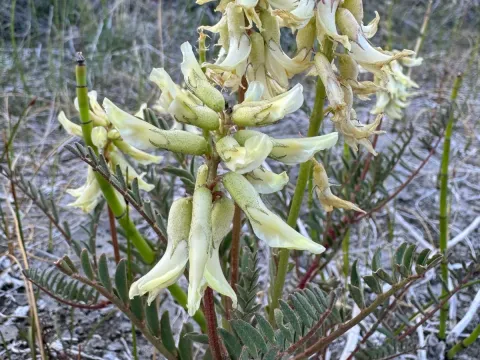
Stinking milkvetch
Astragalus praelongus
Astragalus praelongus, commonly known as stinking milkvetch, is a hardy perennial belonging to the Fabaceae family, native to the arid landscapes of North America.
What the section contains
Stinking milkvetch
This species is characterized by its deep taproot system, which is adapted to extract moisture from arid environments where other vegetation often struggles to survive.
The plant thrives in alkaline soils and is well-known for its ability to accumulate high levels of selenium, making it a subject of interest in ecological studies and phytoremediation research.
Optimal growth conditions include high solar exposure and well-drained soils, as the species is highly sensitive to waterlogging which can lead to root degradation.
Given its chemical composition, the plant is typically considered toxic to livestock due to its ability to absorb and store minerals from the specific geological substrates it inhabits.
Root rot pathogens represent the primary biological threat to Astragalus praelongus, especially when plants are cultivated outside their native, arid climate zones.
Insects such as seed-feeding weevils pose a significant challenge to seed production, as they can consume a large portion of the reproductive output in wild stands.
Bacterial wilt can occasionally occur under conditions of forced irrigation, necessitating strict management of soil moisture levels to protect plant health.
Local wildlife and small mammals may consume early-season vegetative growth, which can impact the establishment rate of new populations.
Effective management strategies focus on site selection that replicates the natural, low-moisture, well-aerated soil profile typical of the species' native habitat.