
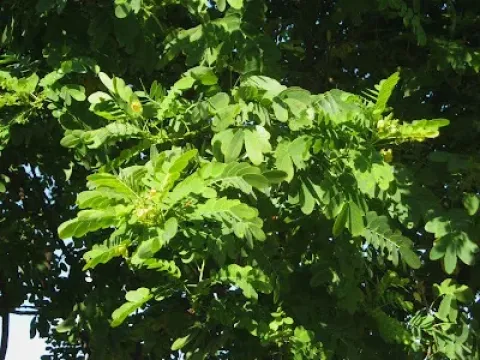
Sturt's Desert Cassia
Cassia sturtii
Sturt's Desert Cassia seeds have a high degree of dormancy due to a hard seed coat, requiring scarification or hot water treatment before sowing. The optimal time for planting is during the spring when the soil temperature consistently reaches 20-25 degrees Celsius.
What the section contains
Sturt's Desert Cassia
Direct seeding or planting in individual containers with proper drainage is recommended to allow for the healthy development of the plant's taproot. Seeds should be planted at a shallow depth of 1-2 centimeters to ensure successful germination and emergence.
When using a seedling approach, care must be taken to avoid disturbing the root system during transplanting, as the species is sensitive to handling. Biodegradable peat pots are preferred, as they can be planted directly into the ground without root shock.
Planting density depends on the intended use, such as windbreaks or ornamental hedges, typically ranging from 1 to 1.5 meters apart. For group plantings intended for aesthetic purposes, this spacing can be reduced to 80 centimeters between specimens.
After the first true leaves emerge, seedlings require moderate irrigation until a robust root system is established. During this phase, it is crucial to avoid waterlogging, as excessive moisture can be detrimental to young specimens.
Sturt's Desert Cassia belongs to the Fabaceae family and is a classic example of Australian xerophytic flora. The plant is perfectly adapted to the harsh conditions of arid regions, where it thrives despite limited annual rainfall.
The crop prefers well-draining sandy or loamy soils with a neutral to slightly alkaline pH. Heavy clay soils that lack proper drainage often cause root rot, which is the most significant threat to the plant's longevity and health.
High levels of solar radiation are essential for successful growth, as this species is highly photophilous and does not tolerate shade. Insufficient sunlight leads to leggy growth and significantly reduces or prevents floral production.
Climate requirements include high summer temperatures, which stimulate the shrub's metabolic activity and growth cycles. In winter, the plant can tolerate light frosts, provided the soil remains relatively dry.
In its native habitat, Sturt's Desert Cassia forms symbiotic relationships with nitrogen-fixing bacteria. This biological adaptation allows the plant to flourish in nutrient-poor soils by enriching the substrate through nitrogen accumulation in root nodules.
The primary threats to Sturt's Desert Cassia health are fungal diseases resulting from poor air circulation and excessive humidity. Powdery mildew, in particular, can diminish the shrub's aesthetic appeal and overall vitality if left untreated.
Pests such as spider mites and scale insects may infest the shrub, especially when grown in greenhouse conditions or during extreme dry spells. Regular inspection of the underside of leaves is necessary for early detection of these populations.
Fungal infections are managed using copper-based fungicides or systemic chemical treatments applied via foliar spray. Application should ideally occur during dry weather to ensure the active ingredients are properly absorbed into the leaf tissue.
Prevention remains the best strategy, focusing on balanced irrigation and spacing that promotes adequate airflow between shrubs. Prompt sanitary pruning of dead or diseased branches prevents the spread of pathogens across the plantation.
On rare occasions, larvae of certain Lepidoptera may feed on the foliage, though this rarely poses a significant threat. If infestation becomes severe, biological insecticides that are safe for beneficial pollinators should be utilized.