
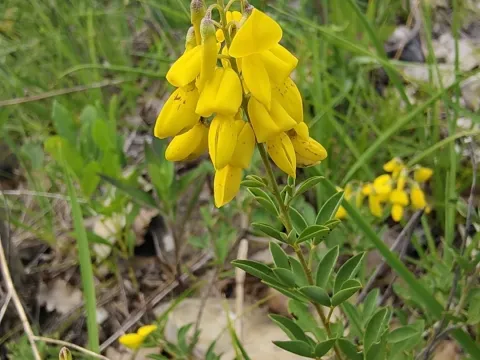
Black broom
Cytisus nigricans
The black broom (Cytisus nigricans) is a deciduous shrub belonging to the Fabaceae family, native to Central and Southern Europe. It is a highly valued ornamental plant known for its striking, erect terminal racemes of bright yellow flowers.
What the section contains
Black broom
Cultivation of this species requires full sun exposure to ensure optimal blooming and compact growth habit. Plants grown in shaded areas tend to lose their structure and produce fewer flowers, which significantly reduces their ornamental value.
Regarding soil requirements, the black broom performs best in well-drained, sandy, or light loam soils with a neutral to slightly acidic pH. It is highly intolerant of waterlogged soil, which can rapidly lead to root decay and overall plant decline.
The species is moderately hardy and thrives in temperate climates. While established plants are quite drought-tolerant, supplemental watering is necessary during prolonged dry spells, especially for young specimens still developing their root systems.
Agrotechnical maintenance focuses primarily on pruning. To maintain the shrub's health and appearance, gardeners should prune back the current year's growth immediately after flowering, which encourages a bushier structure for the following season.
The black broom can be affected by powdery mildew, a fungal infection that appears as a white dusty coating on leaves. This issue is most common in areas with poor airflow and high humidity levels.
Aphids are the most frequent insect pests, clustering on tender new shoots and buds. They suck plant sap, causing stunted growth and leaf curling, which may require the application of insecticidal soaps.
Leaf-eating caterpillars and various beetle species occasionally feed on the foliage. While usually not fatal to an established shrub, heavy infestations can significantly impact the plant's aesthetic quality.
Root rot is a critical threat often caused by improper irrigation practices. Maintaining excellent soil drainage and avoiding deep soil compaction are the most effective preventative strategies against this condition.
Integrated pest management is recommended for this crop. Regular monitoring and the prompt removal of infected branches generally suffice to keep the plant in good health without excessive use of pesticides.