
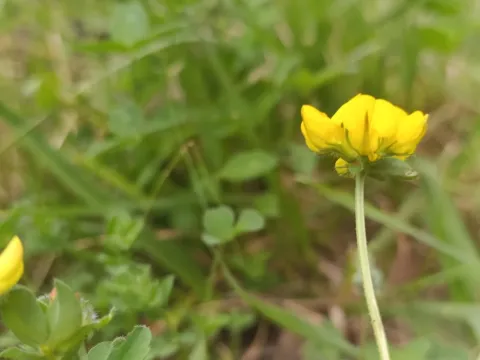
Bird's-foot trefoil
Lotus sativus
Bird's-foot trefoil is typically sown in early spring as soon as the soil is workable. This ensures the seeds have access to sufficient soil moisture, which is vital for the germination of this small-seeded legume variety.
What the section contains
Bird's-foot trefoil
Late autumn sowing is also a viable option in moderate climates, allowing the seeds to germinate early the following season. Proper seed-to-soil contact is essential, so the field must be well-prepared and lightly packed after sowing.
The optimal seeding depth is 1 to 2 centimeters. On lighter, sandier soils, a slightly deeper placement is acceptable to prevent desiccation, while on heavier clay soils, surface drilling followed by a roller is the most effective approach for success.
The seeding rate ranges between 10–12 kg per hectare for pure stands. In pasture mixtures, this rate is reduced to 4–6 kg per hectare to allow other species like fescue or timothy to establish themselves without competition.
Seed scarification is highly recommended before planting. Because the seeds possess a hard seed coat, scarifying them mechanically increases the rate of germination and ensures a more uniform stand throughout the field.
Bird's-foot trefoil is a member of the Fabaceae family, highly valued for its adaptability. It thrives in diverse environments, including acidic, alkaline, and saline soils where more sensitive legumes like alfalfa struggle to survive.
The plant is exceptionally tolerant of poor drainage and can withstand periodic flooding, making it an ideal choice for low-lying meadows. Simultaneously, it exhibits remarkable drought resistance during the summer months.
While it is not overly demanding of soil fertility, it prefers loamy or sandy soils with good aeration to perform at its peak. The presence of symbiotic nitrogen-fixing bacteria in the root system is crucial for its nitrogen-fixing capabilities.
As a light-loving plant, bird's-foot trefoil needs sufficient sun to grow. During its slow establishment phase in the first year, weed control is essential to prevent taller weeds from shading out the young seedlings.
The species is highly winter-hardy and capable of enduring severe cold. It remains productive for many years, making it a reliable, long-term component for managed grazing lands and hay fields in various northern latitudes.
The yield of bird's-foot trefoil is substantial, often producing 20–30 tonnes of green matter per hectare. Its primary appeal is that it maintains high nutritional quality even during the flowering stage, unlike other forage legumes.
For seed production, yields typically range from 0.3 to 0.6 tonnes per hectare. Successful seed harvests depend heavily on the activity of pollinators, especially honey bees and bumblebees, which are required for efficient pollination.
When used as pasture, the plant is highly resistant to trampling. It recovers quickly from grazing, providing a consistent and palatable food source that does not cause bloat in ruminants, a significant advantage over clover.
Depending on the climatic zone, two to three cuts per season can be achieved. Its ability to regrow vigorously after cutting ensures a steady supply of fodder throughout the late summer and autumn grazing periods.
- Lifespan of a productive stand: 5 to 7 years.
- Excellent digestibility and high protein content.
- Bloat-free forage, reducing animal health risks in pastures.
Bird's-foot trefoil is naturally resilient to many common plant diseases. However, in extremely humid conditions, powdery mildew or leaf spot diseases may occur, though they rarely result in total crop failure.
Pests such as the clover root curculio can occasionally damage the root system during the seedling stage. Crop rotation and healthy soil management are the best preventative measures to mitigate potential pest outbreaks.
Aphids can sometimes infest the plant during dry spells. Management strategies focus on integrated pest control, emphasizing the use of beneficial insects and avoiding broad-spectrum pesticides that could harm the pollinators essential to the crop.
Maintaining a healthy, vigorous stand is the best defense against weeds and pathogens. Providing adequate potassium and phosphorus levels in the soil helps the plant maintain its natural resistance to biotic stresses.
Regular monitoring of the fields during the early growth phase allows farmers to identify potential issues early. Early intervention often prevents minor infestations from becoming significant problems for the overall forage yield.
Hay harvesting is most productive during the full bloom stage. At this point, the plant provides the best balance of protein, energy, and dry matter, ensuring high-quality nutrition for livestock during the winter months.
Seed harvesting requires precision because the pods often ripen unevenly and tend to shatter. A two-stage harvest—cutting the crop first and allowing it to dry in windrows—is the standard method to capture the maximum seed yield.
The harvesting equipment must be carefully calibrated to avoid damaging the small seeds. Lowering the cylinder speed and adjusting the clearance of the concave prevents seed cracking and loss during the threshing process.
Post-harvest, the seed must be cleaned and dried to a moisture content of approximately 13%. This standard ensures the seed remains viable during storage and prevents the development of mold or heat damage.
On larger scales, chemical desiccation is sometimes employed to synchronize the ripening of the pods, making the harvesting process more efficient and reducing the mechanical loss of seeds in the field.