
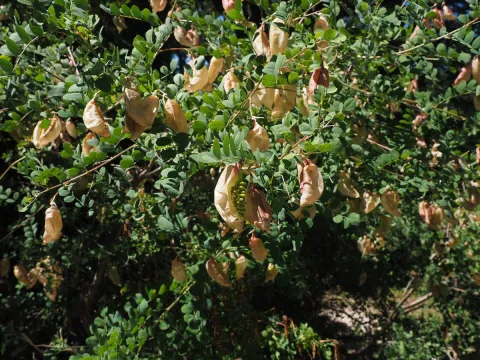
Black-calyx bladder senna
Colutea melanocalyx
The black-calyx bladder senna (Colutea melanocalyx) is a deciduous shrub belonging to the Fabaceae family. This species originates from arid habitats, primarily within the Eastern Mediterranean and Turkey, demonstrating high environmental adaptability.
What the section contains
Black-calyx bladder senna
The plant is highly prized for its drought tolerance and ability to thrive in poor, rocky soils. It is an excellent candidate for erosion control on slopes where more demanding botanical species would struggle to survive.
Sunlight is the most critical environmental requirement for this culture. It requires full exposure to solar radiation to maintain its compact growth habit and to ensure the prolific flowering that defines its aesthetic value.
Soil structure must provide rapid drainage. The species is susceptible to root rot if placed in heavy, waterlogged clays; therefore, well-draining sandy or loamy soils are highly recommended for optimal development.
Cultural maintenance is relatively low-intensive. Periodic pruning is recommended to remove dead wood and encourage vigorous new growth, ensuring the plant remains healthy and architecturally pleasing in garden or field settings.
Fungal pathogens remain the primary biological threat to the health of Colutea melanocalyx. In high-humidity environments, powdery mildew can emerge, causing premature foliage drop and reducing the vitality of the plant.
Aphids constitute the most common pest pressure. These insects primarily target succulent new growth, which can lead to stunted shoot development if the infestation is not managed during the early stages of spring.
Seed-feeding weevils present a specific risk if the crop is being cultivated for seed production. These insects penetrate the characteristic bladder-like seed pods, significantly reducing the viability of the harvest.
Integrated pest management strategies should focus on maintaining adequate spacing to ensure good air circulation. This preventative measure is essential to keep the leaf surfaces dry and inhibit the germination of fungal spores.
When chemical intervention is required, selective insecticides should be applied carefully. It is vital to time applications to avoid harming beneficial pollinating insects that are attracted to the yellow, papilionaceous flowers.