
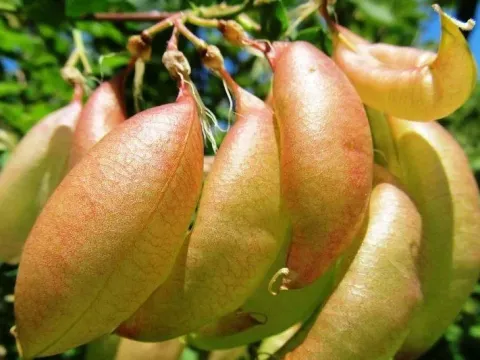
Bladder senna
Colutea gracilis
Propagation of Colutea gracilis is typically achieved through seeds or semi-hardwood cuttings. Seeds have a hard coat, so scarification is highly recommended to improve germination rates before sowing.
What the section contains
Bladder senna
Sowing should take place in spring once the soil has warmed up, or in late autumn for winter stratification. Seeds are planted at a shallow depth of about 1 to 2 centimeters in a well-draining potting mix or prepared garden bed.
For nursery production, seeds are often started in greenhouse conditions to ensure steady development during the initial growth phase. Once the seedlings develop their first true leaves, they can be thinned out or transplanted into individual containers.
Cuttings are taken in mid-summer from healthy, non-flowering shoots. Applying rooting hormones can significantly increase the success rate of cuttings when placed in a moist, sandy medium.
The final spacing between mature plants should be roughly 1.5 meters to ensure adequate airflow and prevent the development of fungal diseases caused by overcrowded conditions.
As a member of the Fabaceae family, Colutea gracilis possesses the beneficial trait of nitrogen fixation. This allows the shrub to thrive in soils with low nutrient content, reducing the need for heavy fertilization.
This species prefers full sun exposure to maintain its compact growth habit and promote prolific flowering. It is highly drought-tolerant once established, making it suitable for xeriscaping in various climatic zones.
Soil requirements focus on excellent drainage rather than high fertility. Sandy or loamy soils are ideal, as the plant does not tolerate waterlogged ground, which can lead to root rot and poor development.
Colutea gracilis is generally frost-hardy and can withstand moderate winters. However, in regions with very harsh winters, it is advisable to provide mulch around the base of the plant to protect the root system from deep freezing.
Agrotechnical maintenance includes regular weeding around the base and occasional light pruning to maintain the plant's structural integrity. It is a low-maintenance shrub that rewards gardeners with minimal intervention.
The "yield" of Colutea gracilis is evaluated through its ornamental value and its contribution to local biodiversity as a nectar-rich plant. It is an excellent choice for supporting pollinators like bees and butterflies.
The shrub is valued for its unique inflated seed pods that appear after flowering, providing interest in the garden throughout the autumn season. This contributes to the overall aesthetic appeal of the landscape.
In terms of production, the quality of the shrub depends on yearly rejuvenation pruning. Removing older, less productive branches encourages new vegetative growth, which in turn leads to more vibrant floral displays.
When used in soil conservation projects, the plant's value lies in its extensive root system. It efficiently binds loose soil, preventing erosion on banks, hillsides, and other susceptible terrain.
Properly managed shrubs can live for many years, providing a consistent supply of flowers and greenery without the need for intensive replanting or constant care.
The most common health issues for this shrub include fungal diseases such as powdery mildew, which can affect foliage during humid and stagnant air conditions. Proper spacing is the best preventive measure.
Insect pests such as aphids and spider mites can occasionally target the succulent parts of the plant. Monitoring the undersides of leaves during the peak growing season is essential for early detection.
Control of fungal infections involves removing and destroying affected foliage, as well as applying fungicides if the infection becomes widespread. Improving air circulation around the crown is often sufficient for recovery.
Pest management should prioritize biological controls where possible to protect beneficial insects. If chemical intervention is necessary, targeted insecticides are preferred over broad-spectrum options.
Routine inspections and sanitary pruning are key to maintaining the plant's health. By keeping the crown thin and free of dead wood, gardeners can minimize the conditions that favor pest and disease outbreaks.