
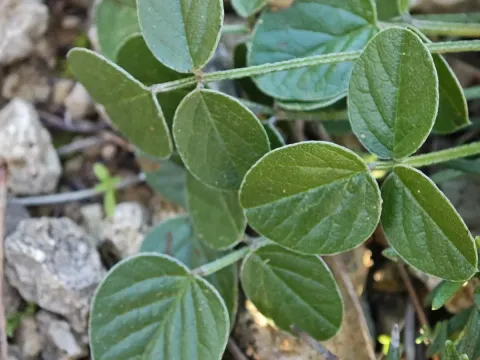
Bituminaria
Bituminaria Heist. ex Fabr.
Bituminaria is a perennial legume often grown for forage. Sowing is typically carried out in early spring when soil temperatures reach a stable 10–12 degrees Celsius.
What the section contains

Bituminaria
The seeds have a hard seed coat, so scarification is highly recommended prior to planting to enhance water absorption and achieve uniform germination across the field.
Seeds should be sown at a depth of 2 to 3 centimeters. Proper soil contact is essential for maintaining moisture levels necessary for the initial stage of seedling development.
Row spacing typically ranges between 30 and 45 centimeters, allowing enough space for the plant to develop a strong root system during its first year of growth.
During the establishment phase, it is crucial to keep the plot free from weed competition, as young plants may grow slowly until they become fully established.
Bituminaria thrives in Mediterranean climates but is adaptable to various conditions. It is well-known for its exceptional drought tolerance once established in the soil.
The plant prefers well-drained soils and can tolerate limestone or rocky substrates. It is sensitive to waterlogging, which can damage its deep root system.
Sunlight exposure is a critical factor for productivity. Areas with full sun exposure are ideal to maximize biomass production and the accumulation of essential oils.
The crop is highly effective at nitrogen fixation, forming symbiotic relationships with soil bacteria, which reduces the need for synthetic nitrogen fertilizers.
It can withstand a wide range of temperatures, although growth slows significantly during cold winter months, during which the plant enters a dormant state.
Yields of Bituminaria are primarily measured in biomass production. Under optimal management, it can provide high-quality forage throughout the growing season.
The plant is known for its ability to provide multiple cuts per year. Harvesting at the right time ensures a balance between total dry matter and nutritional value.
Productivity typically peaks in the second and third years after planting, once the plants have developed a deep, extensive root system capable of supporting heavy growth.
The forage is palatable to livestock, although the plant contains specific compounds that give it a distinctive odor, which animals often adapt to over time.
As a sustainable forage crop, Bituminaria provides long-term stability for grazing systems, reducing the frequency of reseeding and soil management costs.
Fungal diseases, particularly root rot, are the primary threat during periods of excessive soil moisture or poor drainage conditions in the field.
Insect pests like aphids and various weevils can damage the foliage and reproductive structures, potentially impacting seed yield if not monitored correctly.
Weed management is most critical during the first few months. Once the canopy closes, the plant becomes highly competitive against most common weeds.
Maintaining a balanced crop rotation and selecting well-drained planting sites are the most effective preventative measures against common soil-borne pathogens.
Regular field scouting allows farmers to identify early signs of infestation and apply appropriate management strategies before significant damage occurs.
The ideal harvesting time for forage is at the early flowering stage. This phase provides the best ratio of crude protein to fiber, optimizing the nutritional intake for livestock.
When harvesting for seeds, farmers wait until the pods reach a brown color, indicating maturity. This timing is essential to avoid shattering and seed loss during harvest.
A cutting height of at least 8–10 centimeters is recommended to protect the crown of the plant, which is vital for quick regrowth after harvesting.
Post-harvest management involves proper drying of the green matter to reach an moisture content of around 15–17%, preventing spoilage and maintaining forage quality.
Modern harvesting machinery with adjusted settings is crucial to minimize mechanical damage to the delicate seeds and ensure efficient gathering of the biomass.