
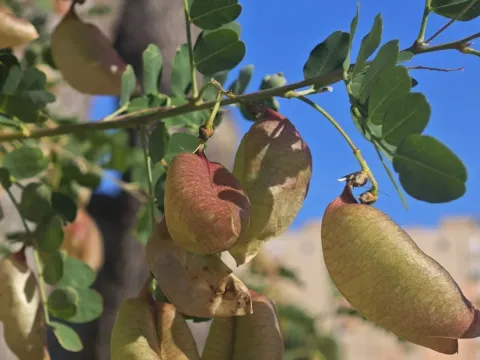
Bladder senna
Colutea
Propagation of Bladder senna is typically done via seeds, which require a period of stratification for one to two months at cold temperatures to break dormancy. Scarification of the hard seed coat can significantly improve germination rates.
What the section contains
Bladder senna
Seeds are sown in prepared beds or nursery containers at a depth of approximately 1–2 cm. Providing a well-drained medium is crucial to prevent damping-off during the initial stages of seedling development.
Vegetative propagation via greenwood cuttings is also a viable method. Cuttings should be taken in early summer and placed in a greenhouse with high humidity and root-stimulating hormones to ensure successful development.
Seedlings show vigorous growth, often reaching up to 50 cm in height during the first growing season. Consistent moisture is necessary until the plant is established in its permanent location.
When transplanting, spacing should be set between 1.5 and 2 meters to allow for proper air circulation and to prevent overcrowding as the shrub matures.
Colutea is a genus of deciduous shrubs within the Fabaceae family, native to regions ranging from Southern Europe to Northern Africa. These plants are exceptionally well-adapted to arid environments and can thrive in poor, rocky, or calcareous soils.
Optimal growth is achieved in full sun exposure. While the plant can tolerate partial shade, insufficient light often results in leggy growth and reduced flowering performance.
Soil requirements are relatively minimal, though the plant performs best in well-drained sandy or loamy substrates with neutral to alkaline pH. Waterlogged soil must be avoided at all costs to prevent root rot.
The climate should provide enough warmth during the summer for seed pod maturation. While generally hardy, young shrubs may require winter protection in colder regions to prevent dieback of terminal shoots.
As a legume, Bladder senna has the biological ability to fix atmospheric nitrogen, which enhances soil fertility. This trait makes it an excellent candidate for land reclamation and soil stabilization projects.
Fungal issues, such as powdery mildew, are the primary health risks, particularly in seasons with high humidity and stagnant air. Maintaining a clean and aerated crown through pruning is essential for disease prevention.
Aphids are the most common insect pests, frequently targeting young shoots and flowers. Early detection and the application of appropriate systemic insecticides can prevent significant damage and stunted growth.
Sanitary pruning should be performed to remove dead or diseased wood. This practice not only keeps the plant aesthetically pleasing but also serves as a critical defense mechanism against pathogen spread.
Pest management should be integrated into regular maintenance routines. Frequent inspections during the spring months help catch potential infestations before they become widespread throughout the shrub.
Despite these threats, Colutea is considered a resilient species that requires little chemical intervention if the site selection and spacing requirements are correctly met.
The primary utility of Colutea is its role as an ornamental shrub and a significant honey plant for local pollinators. Its long blooming period makes it a valuable asset for supporting biodiversity in gardens.
Seed collection occurs in autumn once the characteristic inflated, bladder-like pods have ripened and dried. It is important to harvest them before the pods naturally split and release the seeds.
In landscaping, routine maintenance involves structural pruning, which is best performed in early spring. This promotes denser branching and prepares the shrub for the upcoming growing season.
Due to its rapid growth and ability to tolerate pruning, Bladder senna is frequently used to form hedging or as a focal point in xeriscaping projects where water conservation is prioritized.
While not a traditional food crop, the plant continues to be studied for its unique botanical properties and potential applications in ecological restoration and pharmacological research.