

Reference · Crops
Birdsfoot trefoil
Lotus L.
The seeds of Birdsfoot trefoil have a hard seed coat, so scarification is recommended before sowing to improve germination rates. The optimal time for planting is early spring when the soil is saturated with moisture after the snow melts.
12
items
What the section contains
 Australian trefoil
Lotus australis Andrews
Australian trefoil
Lotus australis Andrews
 Big trefoil
Lotus pedunculatus Cav.
Big trefoil
Lotus pedunculatus Cav.
 Bird's-foot trefoil
Lotus corniculatus L.
Birdsfoot trefoil
Lotus corniculatus L. var. corniculatus
Bird's-foot trefoil
Lotus corniculatus L.
Birdsfoot trefoil
Lotus corniculatus L. var. corniculatus
 Greater bird's-foot trefoil
Lotus uliginosus Schkuhr
Greater bird's-foot trefoil
Lotus uliginosus Schkuhr
 Lotus angustissimus
 L.
Lotus angustissimus
Lotus angustissimus L.
 Lotus berthelotii
 Lowe ex Masf.
Lotus berthelotii
Lotus berthelotii Lowe ex Masf.
 Lotus hybrid
hybrids between Lotus berthelotii and Lotus maculatus
Lotus hybrid
hybrids between Lotus berthelotii and Lotus maculatus
 Lotus maculatus
 Breitf.
Lotus maculatus
Lotus maculatus Breitf.
 Lotus ornithopodioides
 L.
Lotus ornithopodioides
Lotus ornithopodioides L.
 Lotus subbiflorus
Lotus subbiflorus
Lotus subbiflorus
 Slender birdsfoot trefoil
Lotus tenuis Waldst. et Kit. ex Willd.
Slender birdsfoot trefoil
Lotus tenuis Waldst. et Kit. ex Willd.
Marketplace
Products in this section · 9


Birdsfoot trefoil
In some regions, summer sowing is acceptable, but it requires mandatory irrigation as seedlings are sensitive to moisture deficiency in the first weeks of life. The seeding depth is typically between 1 and 2 centimeters, depending on soil type and compaction.
The seeding rate depends on whether it is planted alone or in a seed mixture. When sown in pure stands, about 8-12 kg of seeds per hectare is used, which ensures the stand density necessary to produce a high-quality forage harvest.
Rolling the field after sowing is essential to ensure good seed-to-soil contact. This promotes faster and more uniform emergence, which is critical for establishing a robust root system during the first year of vegetation.
Birdsfoot trefoil is characterized by slow initial growth in the year of sowing, so it is important to ensure timely weed control. Maintenance involves mowing down weeds before they reach the seeding stage to prevent competition.
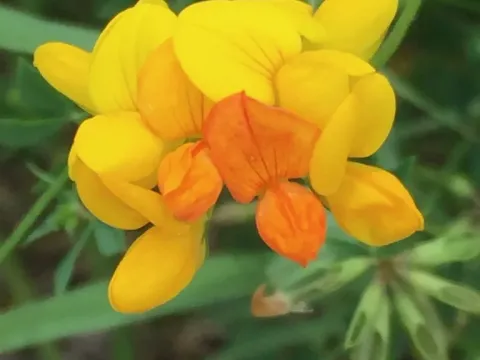
Birdsfoot trefoil (Lotus L.) belongs to the Fabaceae family and is valued for its high ecological plasticity. This perennial plant can grow in soils unsuitable for other legumes, including acidic, waterlogged, or nutrient-poor sandy areas.
The crop is highly winter-hardy and capable of enduring both brief flooding and long periods of drought. These qualities make Birdsfoot trefoil a valuable component for improving natural hayfields and pastures in challenging climatic conditions.
The plant possesses a well-developed root system that penetrates deep into the soil, providing moisture and nutrients. It thrives across a wide range of temperatures but prefers open, well-lit areas for optimal development.
Fertility requirements for Birdsfoot trefoil are lower than those for alfalfa or clover. Nevertheless, the application of phosphorus and potassium fertilizers promotes better plant development, higher biomass, and increased protein content in the green mass.
Thanks to its ability to form a symbiosis with nitrogen-fixing bacteria, Birdsfoot trefoil enriches the soil with nitrogen, making it an excellent precursor in crop rotation. It is successfully used for the biological reclamation of eroded lands.
The yield of Birdsfoot trefoil green mass depends on growing conditions and the composition of the seed mixture. In favorable years with intensive farming technology, up to 20-30 tons of high-quality forage can be obtained per hectare across multiple cuts.
Seed productivity is an important economic indicator for the crop. When proper agronomic practices are followed, seed yields range from 200 to 500 kg per hectare, ensuring the commercial viability of seed production.
The peak accumulation of nutrients occurs at the early flowering stage. It is during this period that the primary harvest is recommended to obtain forage with an optimal balance of protein, sugars, and fiber for livestock.
Birdsfoot trefoil recovers well after mowing, allowing for 2-3 cuts per season under sufficient moisture conditions. However, the intensity of recovery is directly linked to soil moisture reserves and the availability of potassium and phosphorus.
The quality of the forage is characterized by the absence of bloat-causing alkaloids, which gives Birdsfoot trefoil an advantage over many other legumes. This allows it to be used in livestock diets without strict restrictions on grazing time.
The crop possesses high resistance to most diseases that affect legume grasses. However, in conditions of high humidity, cases of powdery mildew or rust may occur, which reduce the visual quality and nutritional value of the forage.
Among pests, weevils pose the greatest danger to Birdsfoot trefoil, as they feed on the generative organs of the plant, significantly reducing potential seed yields. During the flowering period, protection against specific mirid bugs is important.
To prevent the spread of diseases and pests, it is recommended to maintain strict spatial isolation between fields of different ages. This helps break the insect breeding cycle and prevents the accumulation of pathogens in the soil.
In case of massive pest outbreaks, chemical control methods are used, but products must be selected with care regarding pre-harvest intervals, as the crop is used for animal feed. Priority is given to biological agents and integrated pest management systems.
Proper crop rotation is the best prevention against infections. Returning the crop to the same field is recommended no earlier than 4-5 years later, which effectively cleans the soil of accumulated pathogens.
Harvesting for hay is performed at the full flowering stage when the plant is saturated with nutrients. Timeliness is critical, as over-maturity leads to stem coarsening and the loss of leaves, which contain the highest protein content.
Traditional windrow drying technology is used for hay production. It is important to avoid over-drying to preserve leafiness, as Birdsfoot trefoil leaves are rich in vitamins and constitute the most valuable part of the plant.
Seed harvesting requires special attention because the pods of Birdsfoot trefoil are prone to shattering when ripe. To minimize losses, a two-stage harvesting method is used: the crop is cut into windrows and then threshed with a combine after drying.
When used as green forage, grazing begins when plants reach a height of 15-20 cm. It is important to control grazing intensity to prevent excessive trampling and damage to the root crowns, which reduces the longevity of the stand.
After the final use of the field, disking or plowing is carried out. The massive amount of root residue left in the soil significantly improves soil structure and increases organic nitrogen levels for subsequent crops.