
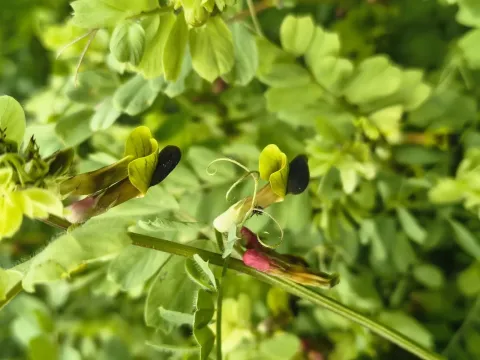
Black vetch
Vicia melanops
Black vetch is a valuable legume species suitable for various agricultural environments. The seeding period typically begins in early spring, once the soil has warmed sufficiently to ensure rapid germination.
What the section contains
Black vetch
For optimal establishment, seeds should be placed at a depth of 3 to 5 centimeters. Proper soil preparation, including light harrowing and rolling, is essential to secure good soil-to-seed contact.
The sowing density should be adjusted based on whether the primary goal is green manure production or harvesting high-quality seeds for future planting cycles.
In regions with milder winters, it can sometimes be sown as an autumn crop, providing early biomass growth that protects soil from erosion during the colder months.
Uniform distribution of seeds is achieved through precision seeding equipment, which prevents overcrowding and competition between individual plants during the early vegetative stages.
Black vetch thrives in temperate climates with adequate rainfall. It is particularly responsive to good light conditions, which promote vigorous stem development and branching.
Regarding soil preferences, it performs best in well-drained loamy soils. It avoids waterlogged areas and requires a neutral or slightly alkaline pH to maximize its nitrogen-fixing potential.
The culture requires sufficient moisture during the initial development phase, but once established, it demonstrates moderate tolerance to dry conditions common in mid-spring.
Symbiotic relationships with root-nodule bacteria allow the plant to enrich the soil with nitrogen, making it a highly sustainable choice for modern agricultural rotations.
Fertilizer application, especially phosphorus and potassium, can significantly boost the resilience of the plant and enhance the overall density of the crop canopy.
The primary use of Black vetch is in forage production, where it provides high-protein green mass that is highly palatable to various types of livestock.
When harvested at the correct growth stage, it produces substantial biomass, which can be processed into hay or silage, ensuring high nutritional intake for farm animals.
Seed production requires the presence of pollinators, as the plant benefits significantly from insect activity. Proper management during flowering is essential for higher yields.
In addition to livestock feed, it is extensively used as a green manure crop to improve soil structure and fertility through the incorporation of organic matter.
Successful yields are closely tied to timely management and the selection of suitable companion crops, such as cereals, which support the climbing stems of the vetch.
Common plant diseases, including powdery mildew, often appear when the plant is grown under high-humidity conditions or with poor field ventilation.
Root rot is a potential risk in poorly drained soils. Implementing strict crop rotation practices is the best way to keep these soil-borne pathogens under control.
Pests such as weevils can cause physical damage to leaves and stems, requiring careful monitoring during the early stages of growth and sometimes necessitating control measures.
Aphids might occasionally infest the plants, particularly in dry and warm weather. While usually manageable, they should be monitored to prevent significant growth suppression.
Integrated pest management, focusing on biological controls and proper site selection, is highly effective in maintaining healthy stands of Black vetch throughout the season.
Harvesting for forage should occur during the early flowering stage to ensure the highest quality of green matter and optimal protein content for animal feed.
For seed production, the harvest is performed when the pods reach maturity and begin to change color, signaling the proper moisture levels for collection.
Avoiding harvest delays is critical, as over-mature pods are prone to shattering, which could lead to significant seed loss across the field during the mechanical process.
Post-harvest handling involves drying the material quickly to prevent spoilage and ensure the seeds maintain their viability for long-term storage.
Mechanical harvesting equipment must be properly adjusted to maintain seed integrity, reducing the risk of crushing while maximizing the final yield per hectare.