
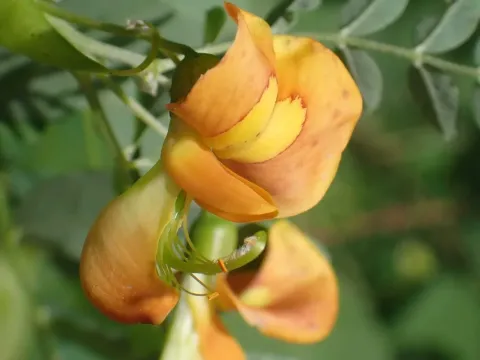
Bladder senna
Colutea media
Colutea media, commonly known as bladder senna, is a hybrid shrub belonging to the Fabaceae family. It is a resilient plant characterized by its unique inflated seed pods and yellow pea-like flowers, which are highly valued in horticultural practices.
What the section contains
Bladder senna
The plant thrives in full sun and requires well-drained soil to reach its full potential. It is exceptionally drought-tolerant once established, making it a sustainable choice for landscapes with minimal irrigation or in arid climatic conditions.
It adapts well to various soil types, including poor, rocky, or chalky substrates. As a member of the legume family, it contributes to soil health by fixing atmospheric nitrogen, thereby naturally enriching the growing medium for surrounding vegetation.
Agronomic management is relatively straightforward: it requires annual pruning in late winter or early spring to remove dead wood and encourage dense branching. This plant is fast-growing, quickly establishing itself in new garden beds or ecological restoration zones.
Beyond its aesthetic appeal, bladder senna is extensively used for bank stabilization and erosion control. Its deep root system securely anchors loose soils, and its high wind tolerance makes it an excellent candidate for protective windbreaks.
While Colutea media is generally robust, it can be susceptible to root rot if planted in waterlogged soil. Proper site selection that ensures water drainage is the most effective preventative measure against soil-borne pathogens.
Aphids are the most common pest found on bladder senna, particularly targeting the young, succulent shoots during the spring season. Integrated pest management, focusing on natural predators, is recommended to control these populations.
Powdery mildew may occur during periods of high humidity and poor air circulation. Thinning the canopy during regular pruning sessions helps maintain airflow and reduces the likelihood of fungal outbreaks.
Small mammals and rodents may occasionally gnaw on the bark during winter when food sources are scarce. Protecting the base of the shrub with wire mesh or repellents can prevent structural damage to the stems.
Overall, the plant is low-maintenance, and providing a stable, sunny environment minimizes the need for extensive chemical interventions, allowing for sustainable cultivation.