
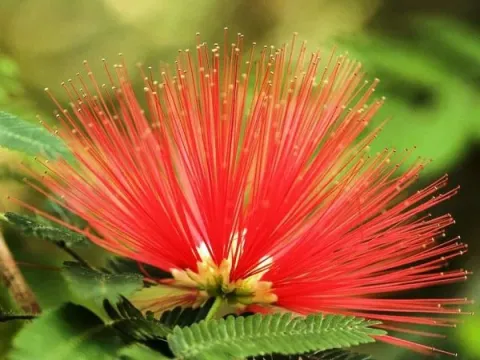
Calliandra
Calliandra
Propagation of Calliandra is typically done through seeds. Because the seeds have a hard coat, scarification—mechanical damage or soaking in hot water for several hours—is essential to improve germination rates.
What the section contains
 Calliandra bella
Calliandra bella
Calliandra bella
 Calliandra breviceps
Calliandra breviceps
Calliandra breviceps
 Calliandra guildingii
Calliandra guildingii
Calliandra guildingii
 Calliandra haematocephala
Calliandra haematocephala
Calliandra haematocephala
 Calliandra houstoniana
Calliandra houstoniana
Calliandra houstoniana
 Calliandra riparia
Calliandra riparia
Calliandra riparia
 Calliandra selloi
Calliandra selloi
Calliandra selloi
 Calliandra tergemina
Calliandra tergemina
Calliandra tergemina
 Calliandra tweedii
Calliandra tweedii
Calliandra tweedii
 Surinam powder puff
Calliandra surinamensis
Surinam powder puff
Calliandra surinamensis
Calliandra
Sowing in nurseries is carried out in polythene bags or seedling trays. The growth medium should be loose and well-drained to prevent root rot in young seedlings.
Transplanting to the field is performed when seedlings reach a height of 20–30 cm, which usually takes 3–4 months. In tropical climates, planting is synchronized with the onset of the rainy season to ensure high survival rates.
Spacing between plants for living fences or energy plantations ranges from 0.5 to 1.5 meters. For forage production, planting density is increased to 10,000–20,000 plants per hectare to maximize biomass output.
Seeds maintain high viability if stored in a cool, dry place, although their germination capacity naturally declines 6–12 months after harvesting.
Calliandra belongs to the Fabaceae family. It is a fast-growing shrub or small tree, highly valued for its ability to actively fix nitrogen in the soil through symbiosis with nodule-forming bacteria.
The crop thrives in humid tropical conditions but shows remarkable adaptability. It develops successfully at altitudes ranging from 200 to 2,000 meters above sea level.
It is not highly demanding regarding soil quality. It can grow on acidic, nutrient-poor soils, including heavily leached lateritic soils where other agricultural species would fail to survive.
The plant exhibits moderate drought tolerance, making it useful for the reclamation of degraded lands. However, to maintain high biomass production, an annual rainfall level of 1,000 to 3,000 mm is recommended.
The temperature optimum for growth is 20–28 degrees Celsius. Calliandra is sensitive to severe frost, which restricts its cultivation range to tropical and subtropical regions with mild climates.
Calliandra has an extremely high potential for biomass production. Under intensive management, forage yield can reach 20–30 tons of dry matter per hectare per year.
Economic use includes the harvesting of hay for livestock. The leaves are rich in protein, making them an excellent protein supplement for the diet of ruminants, especially during periods of fodder scarcity.
The wood of Calliandra is dense with high calorific value, making it a sought-after source of fuel wood and charcoal in rural areas across Asia and Latin America.
The crop is often used in agroforestry systems. It effectively protects soil from erosion on hillsides while simultaneously enriching the ground with nitrogen through leaf litter and root turnover.
In addition to its use as fodder, the plant is a valuable melliferous species. Its prolonged flowering period provides nectar for bees, supporting biodiversity within agroecosystems.
The main threat to Calliandra plantations is fungal diseases, which develop in conditions of high humidity and poor air circulation within dense canopy structures.
Lepidopteran larvae are common pests that can cause significant damage to the foliage, substantially reducing total forage yield.
Root rot, caused by soil-borne pathogens, often occurs in waterlogged areas with heavy clay soils where water tends to stagnate after heavy rainfall.
In some regions, seed damage by weevils is observed, which complicates the collection of quality planting material and necessitates phytosanitary treatment of seed production plots.
Integrated pest management, including the use of biological agents and maintaining optimal spacing to prevent canopy overcrowding, is highly recommended.