
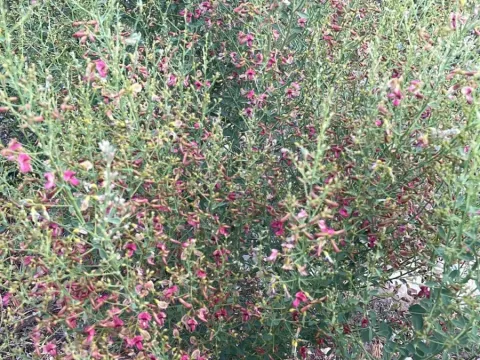
Camelthorn
Alhagi
Camelthorn (Alhagi) is a perennial shrub belonging to the Fabaceae family. It is widely recognized for its extreme drought resistance and its ability to thrive in harsh environments where water availability is minimal.
What the section contains

Camelthorn
The plant possesses a remarkably deep root system, which can reach depths of up to 15 meters. This allows it to access groundwater, ensuring survival even during prolonged periods of drought and high evaporation rates.
Camelthorn prefers sandy, loamy, and saline soils. It is often found in arid and semi-arid regions of Central Asia, the Middle East, and parts of the Mediterranean, where it plays a role in stabilizing loose soil and preventing erosion.
Environmental conditions requirements include high solar radiation and warmth. The species is highly light-demanding, which means it rarely competes successfully in areas with high canopy cover, preferring open, disturbed landscapes.
The agricultural and economic utility of the plant is significant in specific climates. It serves as a vital forage crop for camels and goats, especially in late summer when other plants have withered, and it is a prized source of nectar for honey production.
Camelthorn is susceptible to various biological stressors, including insect herbivores like weevils that infest the pods and seeds. These pests can significantly reduce the viability of the seeds and limit the natural spread of the plant.
Aphid infestations are common during the growing season, particularly on younger, more tender stems. These insects drain plant nutrients, which can weaken the shrub's overall vigor and make it more susceptible to secondary environmental stress.
Fungal diseases, including rusts and powdery mildew, can appear in environments with higher than average humidity. While these diseases are rarely fatal to the robust rootstock, they can damage the foliage and reduce biomass quality.
In agricultural settings, Camelthorn is frequently classified as a troublesome weed due to its aggressive growth from deep buds on the roots. Cultivation requires precise management, as mere surface tillage often stimulates further regrowth.
Integrated weed management, including the use of systemic herbicides and repeated deep cultivation, is required for control. Because the root system is extensive, eradication often necessitates a multi-year management strategy to exhaust the plant's food reserves.