
Calliandra tweedii
Calliandra tweedii
Description
Growing requirements
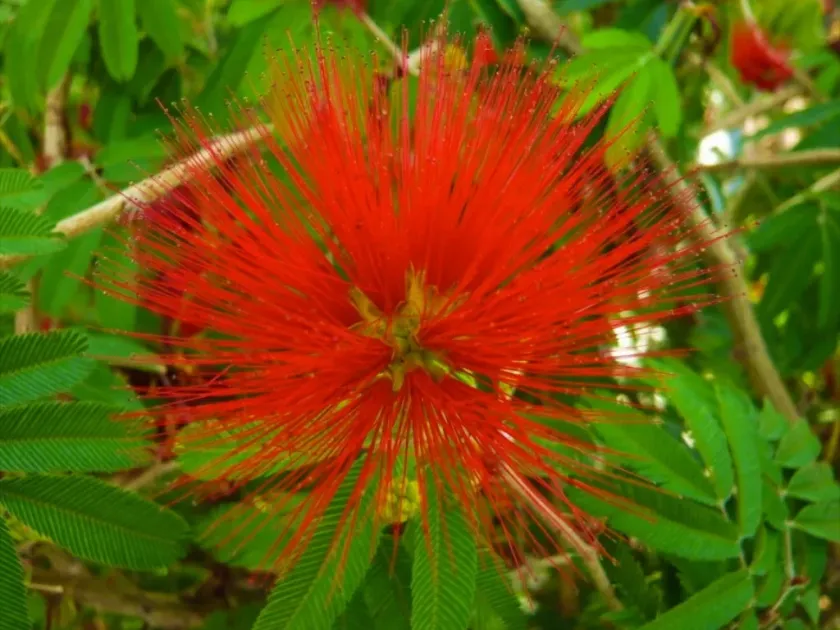
Calliandra tweedii, commonly known as the flame bush, is a distinctive evergreen shrub belonging to the Fabaceae family. It is widely recognized for its vibrant, feathery, red stamens that resemble small brushes or pom-poms.
Native to South America, specifically Brazil and Uruguay, this species thrives in tropical and subtropical environments. It requires significant warmth and humidity to maintain its health and continuous blooming cycle throughout the year.
For successful cultivation, the plant needs a spot with bright, indirect sunlight. While it can tolerate some direct sun, prolonged exposure to intense heat can damage its delicate, fern-like pinnate leaves.
The soil requirements involve a well-draining, slightly acidic to neutral substrate. Using a high-quality potting mix enriched with compost is recommended to provide essential nutrients and maintain the necessary porosity for root development.
In terms of usage, Calliandra tweedii is primarily an ornamental crop. It is highly valued in greenhouse management and interior landscaping for its aesthetic appeal and the ability to add a touch of exotic flair to indoor spaces.
Main diseases and pests
Spider mites are the most significant threat to this plant, especially when indoor humidity levels drop too low. Regular misting and proper air circulation are vital to prevent large-scale infestations of these pests.
Scale insects and mealybugs can also pose a risk by feeding on the sap. Early detection through regular leaf inspection and the use of horticultural oils can effectively mitigate these threats without heavy chemical usage.
Root rot is a common issue caused by overwatering or poorly draining soil. To prevent this, always ensure that the pot has adequate drainage holes and allow the top layer of soil to dry out slightly before the next watering.
Fungal diseases, such as leaf spot, can develop in stagnant, humid environments with poor ventilation. Ensuring adequate space between plants and maintaining a steady temperature can significantly reduce these risks.
Nutritional deficiencies, manifesting as yellowing foliage, may occur if the soil pH is not maintained or if micronutrients are insufficient. Regular application of a balanced fertilizer specifically formulated for ornamental shrubs is recommended.