
Calliandra guildingii
Calliandra guildingii
Description
Growing requirements
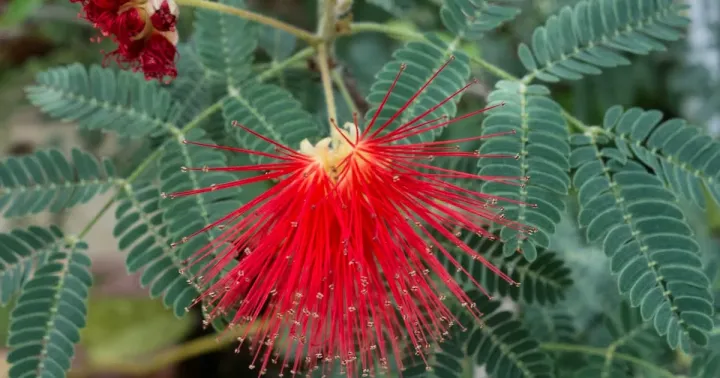
Calliandra guildingii is a remarkable evergreen shrub belonging to the Fabaceae family. It is widely recognized for its vibrant, brush-like stamens that bloom in clusters.
Native to the Caribbean and South American tropical zones, this plant requires a climate that mimics its natural habitat. It thrives in high humidity and warm environments.
Soil requirements include well-draining, nutrient-rich substrates with a slightly acidic pH. Waterlogging must be avoided strictly to prevent root decay in this species.
Light exposure should be generous, preferably bright indirect sunlight. In indoor cultivation, supplemental lighting may be needed during winter months to maintain health.
Maintenance involves frequent pruning to encourage branching and blooming. Fertilizer application should be carried out during the growing season using balanced formulas.
Main diseases and pests
Spider mites are the most common pests found on Calliandra. They flourish in low-humidity environments, causing stippling and webbing on the underside of leaves.
Mealybugs can also infest the stems and buds. Regular cleaning of the foliage with a mild soap solution is an effective preventative measure against such infestations.
Root rot, caused by various species of fungi, is a common threat when soil aeration is poor. Proper drainage and sterile planting medium are essential precautions.
Chlorosis is a frequent issue if the irrigation water is too alkaline or if the plant lacks access to essential micronutrients like iron or magnesium.
Finally, improper air circulation can lead to sooty mold growth on honeydew secreted by sucking insects, necessitating prompt pest management and cleaning.