
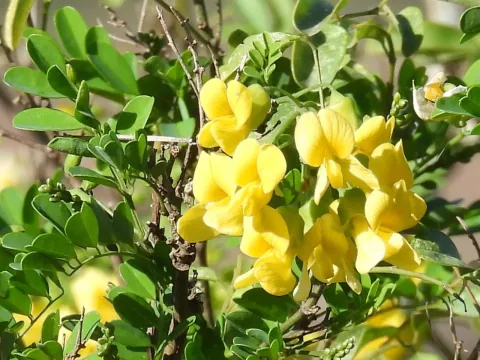
Calpurnia
Calpurnia
Calpurnia is a genus of evergreen trees and shrubs belonging to the legume family (Fabaceae). The most common species, Calpurnia aurea, is highly valued for its striking pendulous racemes of bright yellow flowers.
What the section contains

Calpurnia
Native to Southern and Eastern Africa, these plants are naturally adapted to diverse habitats ranging from forested mountain slopes to open shrublands. They thrive in environments where they receive abundant sunshine.
Cultivation requires well-drained, fertile soil. The plant is sensitive to waterlogging, so soil aeration is critical for healthy development. Incorporating organic matter into the planting hole ensures better growth rates.
Calpurnia performs best in warm, frost-free climates. In regions with cooler winters, it should be protected or kept in containers and moved indoors to ensure survival during the colder months.
Regarding agricultural use, it is primarily an ornamental crop used for aesthetic landscaping. Its ability to fix nitrogen makes it an interesting subject for ecological studies regarding soil enrichment in its native range.
Calpurnia is relatively resistant to serious diseases, provided it is planted in an appropriate environment. The main risk is the development of root rot, which typically occurs in soils with poor drainage.
Insects such as aphids and spider mites can attack the foliage. These pests often target young, succulent shoots during dry periods, potentially causing leaf curling or stunted growth.
Management of these threats includes maintaining optimal watering practices to avoid drought stress, which can attract spider mites, and using systemic insecticides if an infestation occurs.
Proper pruning is essential for maintaining air circulation through the canopy, which naturally reduces the risk of fungal infections that flourish in dense, damp foliage.
Regular inspections and keeping the area around the base of the plant free from debris are the best cultural practices to prevent the spread of diseases and pests in the garden.