
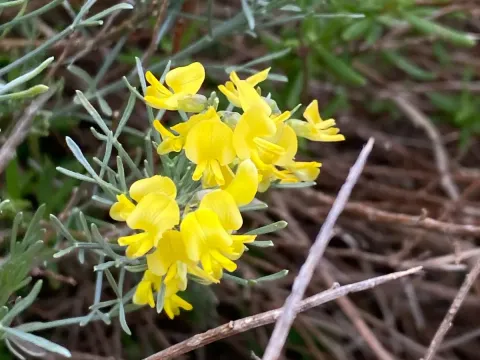
Calobota
Calobota
Calobota is a genus belonging to the Fabaceae family, adapted to the specific climatic conditions of Southern Africa. In agricultural settings, sowing is typically synchronized with the onset of the wet season to ensure optimal moisture for germination.
What the section contains

Calobota
The seeds possess a hard, impermeable seed coat that necessitates scarification to break dormancy. Without this physical treatment, germination rates remain extremely low due to the physiological state of the seeds.
Planting should be performed in a well-draining, sandy substrate at a depth of 2 to 3 centimeters. Proper soil structure is essential to allow the developing taproot to penetrate the ground without encountering resistance.
Initial irrigation must be managed with care; while seeds require consistent moisture to germinate, excessive water in the seedbed is detrimental to the seedling's survival.
Row spacing should be sufficient to accommodate the bush-like growth habit of the plant, ensuring that each individual specimen receives enough light and airflow for healthy development.
This species is highly adapted to arid and semi-arid environments, thriving in full sun with high light intensity. It is an excellent candidate for regions experiencing prolonged droughts.
The primary soil requirement for Calobota is exceptional drainage. It is naturally found in coarse or sandy soils where water does not pool, preventing the root rot associated with saturated conditions.
Temperature requirements for active growth range from 18 to 28 degrees Celsius. The plant is structurally resilient and can withstand the significant day-to-night temperature fluctuations common in its native habitat.
Calobota does not require highly fertile soil, as it fixes atmospheric nitrogen through symbiotic relationships with soil bacteria. Excessive fertilization, particularly with nitrogen, may negatively affect this natural process.
The plant demonstrates high tolerance to dry, hot winds, making it useful in reclamation projects for degraded lands where other forage species might fail to establish.
While not a major commercial crop, Calobota provides significant value as a forage plant and a candidate for soil stabilization in arid zones. Specific biomass yields are generally dependent on local environmental conditions.
The foliage provides a protein-rich source of nutrients for livestock, making it a valuable resource for subsistence pastoralism in extreme environments where conventional crops do not thrive.
Seed yield is strictly linked to pollinator activity. The complex morphology of the flowers requires specific insect interactions, which can limit reproductive success if populations of pollinators are low.
Under managed conditions, regular pruning can promote denser growth, potentially increasing the total harvestable biomass for specialized feeding programs.
The long-term yield of the plant is also characterized by its ability to improve soil quality through nitrogen fixation, providing indirect benefits to subsequent crops in a rotation cycle.
The most significant threat to the health of the plant is root rot caused by pathogenic fungi, which almost exclusively occurs due to improper watering and soil waterlogging.
Common legume pests, such as weevils and various aphid species, are the primary insects that damage the plant. They target developing buds and fresh stems, impacting both yield and plant vitality.
Weed competition is a severe issue during the establishment phase. Since Calobota grows relatively slowly in the first few months, it can be easily outcompeted for water and sunlight by invasive weeds.
In enclosed or humid cultivation areas, powdery mildew can become a significant issue, particularly if air circulation around the canopy is restricted.
Effective management includes using clean, high-quality seed, maintaining good soil aeration, and implementing strict weed control measures during the initial stages of the growing season.