
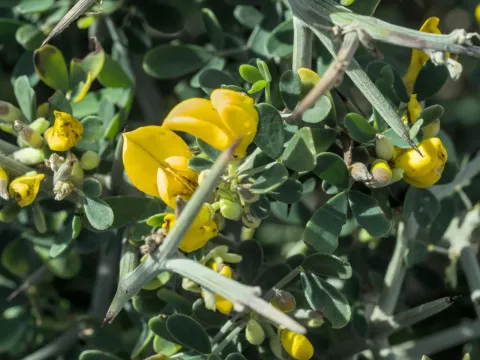
Calicotome
Calicotome
Propagation of Calicotome is primarily achieved through seeds. Given the seed's hard coat, scarification is necessary before sowing to enhance germination rates.
What the section contains

Calicotome
Sowing is conducted in spring when soil temperatures are consistently warm. Seeds should be planted at a depth of 2–3 cm with light compaction to ensure contact.
Vegetative propagation via cuttings is possible but requires specialized nursery conditions, including high humidity and the application of rooting hormones.
Seedlings show slow initial growth; therefore, keeping the planting area free of weeds is crucial during the first year to prevent competition for resources.
Established plants demonstrate strong natural regeneration capabilities, often colonizing suitable adjacent areas if environmental conditions allow.
Calicotome is a member of the Fabaceae (legume) family, perfectly adapted to the Mediterranean climate, characterized by hot, dry summers and mild, wet winters.
This shrub is highly photophilous and requires full sun exposure to thrive; it does not tolerate shading from other plants or dense canopy structures.
The plant is remarkably undemanding regarding soil quality, successfully growing in rocky, nutrient-poor, and arid substrates where other species fail.
A vital biological trait is its nitrogen-fixing ability through symbiosis with root bacteria, which significantly contributes to soil enrichment and fertility.
Proper soil drainage is essential; Calicotome cannot tolerate waterlogging, which rapidly leads to root system decay and eventual plant mortality.
Economic use of Calicotome does not focus on traditional crop harvesting but rather on its significant ecological and agricultural service functions.
It is an essential early-spring honey plant, providing crucial nectar and pollen sources for bees during a period when most other vegetation is not yet active.
The shrub biomass can serve as a supplementary forage source for goats and sheep, especially in arid regions where grazing pastures diminish during summer.
Due to its dense, thorny architecture, Calicotome is widely used as a natural, impenetrable hedgerow to secure perimeters or divide agricultural plots.
The wood of this shrub is known for its high density, making it a reliable source of fuel in its native range due to its excellent heating value.
Calicotome possesses natural defenses against common agricultural pests, including sharp thorns and secondary metabolites, making heavy infestations rare.
The primary threat to young specimens comes from rodents, which may feed on the bark during colder months, potentially girdling the stems and killing the plant.
Fungal diseases like powdery mildew may occur under conditions of excessive humidity or stagnant air, requiring better site selection and thinning.
Root rot is the most significant health risk, occurring primarily when the plants are placed in heavy, clay-rich soils that lack proper drainage.
The plant is exceptionally hardy, generally requiring minimal to no chemical intervention, which makes it an ideal candidate for low-input sustainable agricultural systems.