
Calliandra riparia
Calliandra riparia
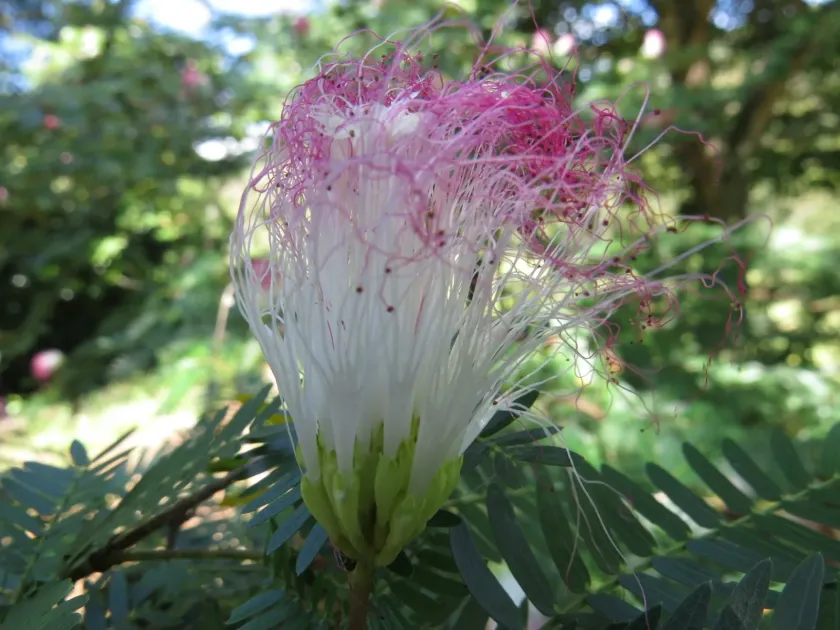
Description
Sowing dates
Calliandra riparia is a perennial member of the Fabaceae family, highly valued for its adaptability in tropical ecosystems. Propagation is primarily achieved through seeds, which should be collected from mature, healthy specimens to ensure high viability.
Before sowing, seeds benefit from mechanical or hot-water scarification to break dormancy and ensure uniform germination. They are sown in nursery beds or containers with well-drained, sterile media to prevent damping-off disease.
Germination typically occurs within two to three weeks under consistent moisture and warmth. Once the seedlings reach a height of 20–30 cm, they are ready for hardening off and subsequent transplanting into the field.
Field planting is ideally conducted at the beginning of the rainy season to facilitate rapid root establishment. The spacing should be determined based on the intended use, such as hedgerows, soil protection, or fodder production.
During the initial growth stages, adequate weed control is essential. Mulching around the base of the young plants helps retain soil moisture and suppresses weed competition until the plant becomes established.
Growing requirements
This species thrives in tropical climates with high annual rainfall. It is best adapted to regions where temperatures remain consistently above 20°C, as it does not tolerate frost or prolonged cold snaps, which can lead to severe dieback.
Calliandra riparia is remarkably versatile regarding soil types. It performs well in deep, fertile soils but is also capable of growing in thinner, slightly degraded soils, where it contributes to nitrogen fixation.
Sunlight requirements are moderate; while the plant grows best in full sun, it shows good shade tolerance, making it an excellent candidate for inclusion in multi-strata agroforestry systems.
Water availability is critical during the first two years of development. Once the deep root system is established, the plant exhibits increased drought resistance and can survive shorter dry seasons without significant loss.
Protection from high wind speed is recommended in open fields to prevent physical damage to the branches. Providing windbreaks or installing simple supports for young trees can significantly improve structural development.
Yield
Calliandra riparia is recognized for its high production of biomass. It can be harvested multiple times per year through systematic pruning, providing a steady supply of green manure or fodder for livestock.
The wood produced by the plant is dense and makes excellent high-quality fuel. Harvesting for wood typically follows a longer cycle of several years, allowing the plant to develop a substantial trunk and branch structure.
Nitrogen fixation is a major benefit for yield in mixed cropping systems. The organic nitrogen provided by the leaf litter improves the fertility of the surrounding soil, indirectly increasing the yield of companion crops.
The plant acts as a vital tool for preventing soil erosion on slopes. By creating a dense canopy and an extensive root network, it stabilizes the ground and improves the overall health of the agricultural landscape.
Bee forage potential represents an additional yield component. The flowers are attractive to pollinators, and the species is known to be a useful nectar source in regions where it is widely cultivated.
Main diseases and pests
In high-humidity environments, fungal leaf diseases can pose a challenge. These usually present as spotting, which can lead to premature leaf drop if not managed through proper canopy thinning and ventilation.
Insect pests such as leaf-eating caterpillars and aphids may attack during the peak of the growing season. While infestations are usually minor, regular monitoring is necessary to prevent extensive defoliation.
Root rot caused by Phytophthora or Fusarium species is the most severe threat, usually occurring due to waterlogged soil conditions. Proper drainage is the most effective preventative measure against these pathogens.
Competition from aggressive grass species is a common threat in newly planted stands. Keeping the area clear of weeds ensures that the young Calliandra trees receive sufficient nutrients and water during critical growth phases.
Integrated pest management (IPM) practices, including the encouragement of natural predators, are recommended to maintain the plant's health without the excessive use of chemical pesticides.