
Calliandra haematocephala
Calliandra haematocephala
Description
Growing requirements
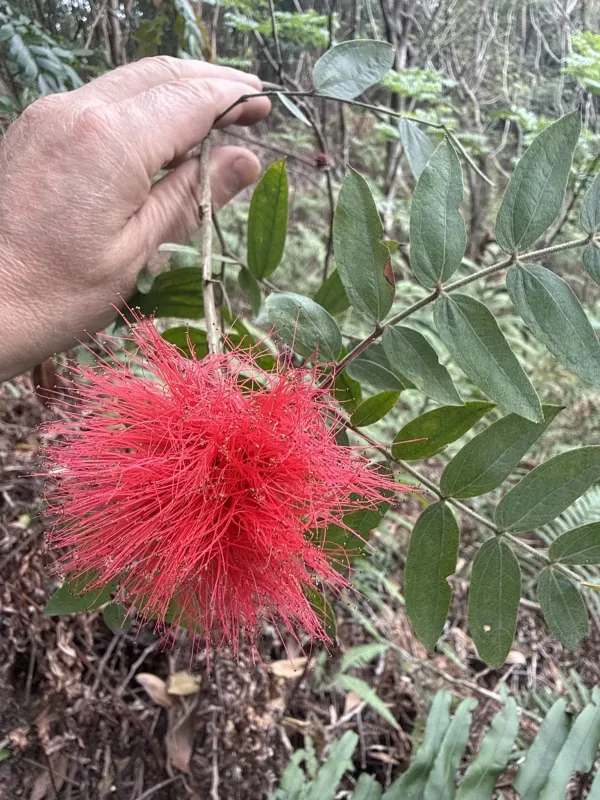
Calliandra haematocephala, commonly known as the Red Powder Puff, is a notable member of the Fabaceae family. It is an evergreen shrub recognized for its spectacular puff-like flowers that appear throughout the year in tropical climates.
The plant originates from Bolivia and surrounding tropical regions, which dictates its preference for warmth and high humidity. It thrives best in zones where temperatures rarely drop below 15 degrees Celsius throughout the year.
Soil requirements for this species are specific: it demands a well-draining, slightly acidic to neutral substrate. Heavy, clay-based soils should be avoided as they often trap too much water, risking root suffocation.
Light intensity significantly affects the blooming capacity of Calliandra. To achieve optimal flowering, the plant requires full sun to partial shade, ensuring it receives at least six hours of bright, diffused light daily.
Maintenance involves balanced fertilization during the active growing season, usually from spring to late summer. A water-soluble fertilizer with a balanced NPK ratio helps maintain leaf vigor and supports the production of its unique floral heads.
Main diseases and pests
The most frequent pest challenges include spider mites, which thrive in dry indoor or greenhouse environments. These pests can be managed by increasing ambient humidity and using targeted miticides.
Mealybugs are another common nuisance that colonize the undersides of leaves and leaf axils. Physical removal with alcohol-soaked swabs or the application of horticultural oils is often effective for small infestations.
Fungal issues, particularly root rot, typically arise from overwatering or inadequate soil drainage. It is critical to allow the top inch of soil to dry out before providing additional moisture.
Leaf spot pathogens may develop if air circulation is insufficient. Improving airflow around the canopy and ensuring the foliage remains dry during irrigation helps mitigate these risks significantly.
Regular inspection is the cornerstone of effective plant health management for Calliandra. By catching infestations early, growers can prevent the spread of pests and maintain the plant's ornamental quality for years.