
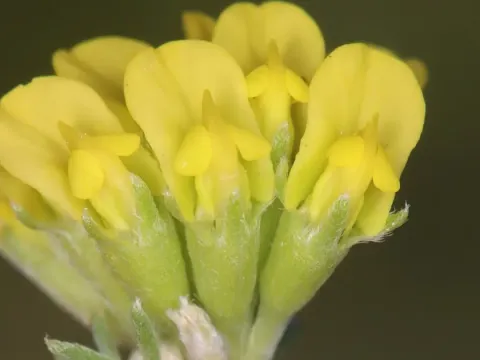
Anthyllis onobrychioides
Anthyllis onobrychioides
Anthyllis onobrychioides is a valuable perennial legume that requires careful sowing planning. Sowing is best conducted in early spring, allowing the plant to establish its deep root system during the temperate months.
What the section contains
Anthyllis onobrychioides
The seeds are known for their hard seed coat, which necessitates mechanical scarification before sowing. This process significantly improves germination rates and ensures a uniform stand density across the field.
Optimum sowing involves drilling in rows to facilitate better soil-to-seed contact. The sowing depth should be maintained between 1 and 2 cm, preventing the seeds from being buried too deep in the soil.
Seedbed preparation is crucial; the soil must be fine-tilled to promote rapid moisture absorption. Achieving a balanced soil structure is essential for the success of this crop in its first growing season.
In regions with reliable spring rains, no additional irrigation is typically required after sowing. Once established, the plant shows excellent vigor and competing ability against weeds.
This species is highly adapted to sunny, Mediterranean-like climates with well-drained, lime-rich soils. It thrives in conditions that would otherwise be challenging for more sensitive forage plants.
Anthyllis onobrychioides requires an open environment with full sunlight exposure to reach its maximum productivity. It performs poorly in shaded areas, which can lead to reduced biomass and plant vitality.
The plant has a strong preference for neutral or slightly alkaline soils and shows poor tolerance for waterlogged or acidic soil environments. Proper drainage is the most critical soil requirement for this crop.
Temperature tolerance is a hallmark of this plant, as it handles seasonal temperature fluctuations well. It is specifically adapted to survive in mountainous or arid regions where water availability is periodic.
Nutrient management focuses on the synergy with nitrogen-fixing bacteria. While it produces its own nitrogen, phosphorus fertilization during the initial stages can bolster root development and long-term sustainability.
Anthyllis onobrychioides provides high-quality forage, particularly rich in protein and minerals. It is highly valued for its ability to maintain nutritional value even at late growth stages.
When used in pastures, it demonstrates excellent grazing tolerance, recovering rapidly after being browsed by livestock. This trait makes it an ideal candidate for sustainable pastoral systems.
The biomass yield is consistent over several years, with peak production usually achieved in the second or third growing season. Its perennial nature allows for long-term use in stable grazing plots.
For seed production, the presence of local pollinators is essential. Healthy populations of bees and bumblebees significantly boost seed set, increasing the overall economic yield for the grower.
When managed properly, the crop supports high-intensity livestock rotation without depleting the soil. It remains one of the most reliable choices for rehabilitating degraded, dry grasslands.
Like many members of the Fabaceae family, this crop can be susceptible to powdery mildew and rust under high humidity conditions. Maintaining good field sanitation is the primary defense.
Insects, particularly weevils and certain leaf-feeding beetles, can impact the harvest. Monitoring for these pests during the vegetative phase is recommended to prevent significant damage.
Root diseases are primarily associated with soil saturation. Avoiding poorly drained fields and ensuring good oxygen circulation in the soil is the most effective preventative strategy.
The use of integrated pest management (IPM) is encouraged to maintain the delicate balance of beneficial insects, especially pollinators, in the field environment.
Regular visual inspections of the leaf apparatus allow for the early detection of stress, enabling timely corrective agricultural measures that protect the overall health of the stand.
Harvesting for hay should take place during the full flowering stage. At this point, the ratio of nutritional elements is at its optimal level for animal consumption.
Seed harvesting requires careful timing, typically when the pods reach a brown color. Immediate post-harvest processing is necessary to prevent spoilage due to moisture retention.
Drying the harvested biomass should be conducted using passive or active ventilation systems to avoid overheating. Proper storage in dry, well-ventilated areas preserves seed viability.
The cutting height is of great importance for plant regeneration. Care should be taken not to cut too low, ensuring that the plant's growing point remains intact for future regrowth.
Cleaning seeds using standard agricultural sieves helps remove impurities and undersized material, resulting in a high-quality product ready for the next planting season.