
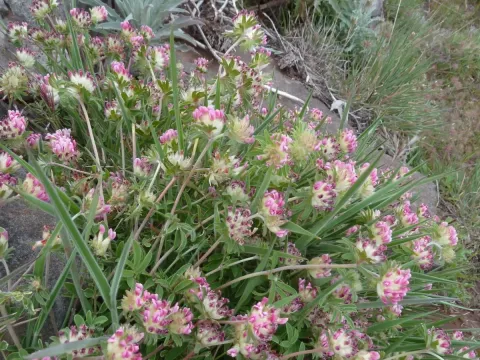
Anthyllis lemanniana
Anthyllis lemanniana
Anthyllis lemanniana is a perennial herbaceous plant belonging to the Fabaceae family, recognized for its resilience and ability to thrive in challenging environmental conditions.
What the section contains
Anthyllis lemanniana
The optimal time for sowing is early spring when the soil temperature consistently reaches 5-8 degrees Celsius, ensuring sufficient moisture for rapid germination.
Precision seeding at a depth of 2-3 cm is recommended, followed by field rolling to improve soil-seed contact and maintain the necessary hydration for seedlings.
The seeding rate varies depending on the purpose, typically ranging from 12 to 15 kg per hectare for pure stands to ensure a dense and productive canopy.
Using high-quality, pre-inoculated seeds can significantly improve nitrogen fixation efficiency, leading to stronger initial growth and better overall yield potential.
This species is highly drought-tolerant, making it an excellent choice for arid regions where water scarcity limits the cultivation of more demanding forage crops.
It prefers well-drained loamy or sandy soil types with a neutral to slightly alkaline pH, while avoiding areas prone to waterlogging or high water tables.
Anthyllis lemanniana requires full sun exposure for optimal development, as shaded areas can lead to reduced biomass production and weakened root systems.
The plant exhibits remarkable winter hardiness, allowing it to withstand severe frost and temperature fluctuations common in continental climates.
While tolerant of low-fertility soils, it benefits from moderate phosphorus and potassium application to support long-term vigor and nutrient quality in forage.
The primary agricultural utility of Anthyllis lemanniana lies in its role as a high-quality forage crop, suitable for both hay production and managed grazing.
The foliage is rich in proteins, minerals, and calcium, providing a nutritious feed source that supports healthy livestock growth and productivity.
Yield stability is a key characteristic of the crop, with productive stands capable of maintaining biomass production for several years under proper management.
Beyond its feed value, it acts as an effective nitrogen fixer, naturally improving soil structure and fertility for subsequent crops in a rotation cycle.
The crop's capacity for rapid regrowth after mowing or grazing makes it an ideal candidate for intensive pasture management systems in agricultural landscapes.
Root rot diseases are the most common issue in poorly drained fields, where stagnant water inhibits root respiration and encourages the spread of pathogens.
Powdery mildew may occur during periods of high humidity and heat, particularly in dense stands where air circulation is restricted around the plants.
Insects such as weevils and aphids can damage vegetative and generative parts, highlighting the need for regular field scouting during the growth season.
Integrated pest management strategies, including the use of resistant varieties and proper field hygiene, are essential for minimizing crop losses.
- Regular field monitoring for pest outbreaks.
- Optimal spacing to improve air circulation.
- Crop rotation to break disease cycles.
Harvesting for hay should be timed with the early flowering phase, as this period offers the best balance between biomass quantity and nutritional density.
Careful handling of the mown material is necessary during the drying process to prevent excessive leaf shattering, which contains the highest nutrient content.
When harvesting for seed, timing is critical to prevent pod shattering; the seeds should be collected once pods turn brown but before they open naturally.
Post-harvest processing involves thorough cleaning and drying to reach safe moisture levels, preventing spoilage during storage in barns or granaries.
Effective harvest management not only preserves the value of the current season's yield but also ensures the quality of future plantings from collected seeds.