
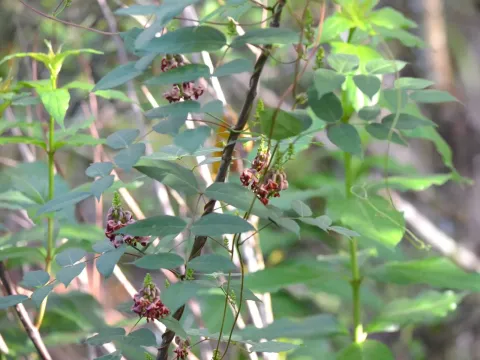
Apios
Apios Fabr.
Apios (Apios americana), also known as the groundnut or potato bean, is a perennial vining legume. Planting is typically performed in early spring once soil temperatures reach 10-12 degrees Celsius, or in late autumn before the ground freezes.
What the section contains

Apios
Propagation is primarily done using small tubers or segments of rhizomes. These should be planted at a depth of 5-8 centimeters to ensure proper establishment and protection from surface temperature fluctuations.
Because the plant has a long growing season, gardeners in cooler climates often start tubers indoors 3-4 weeks before the last frost date to give the crop a necessary head start.
Spacing is vital for healthy development; plants should be set 30-40 centimeters apart within rows, with rows spaced 70-90 centimeters apart. This allows for adequate airflow and easy access for weeding.
Initial growth is slow as the plant focuses on root system development. Keeping the area free of weeds during the first month is critical to prevent the young vines from being outcompeted.
Apios thrives in locations with full sun to partial shade. As a climbing plant, it requires sturdy trellises or supports to grow vertically, which also helps improve yields by increasing exposure to light.
The ideal soil is sandy or loamy with good drainage and a slightly acidic to neutral pH. Avoiding heavy clay soils is important as they can restrict tuber expansion and lead to poor drainage.
Although the plant requires consistent moisture, especially during the peak of summer, it is susceptible to rot in waterlogged conditions. Proper irrigation management is key to successful production.
The plant is highly adaptable to various temperatures but grows most vigorously in warm summer conditions. While it is hardy in many zones, applying mulch over the root zone protects tubers from extreme cold in winter.
Given its nature as a nitrogen-fixing legume, Apios requires minimal additional nitrogen fertilization. Over-fertilizing with nitrogen may promote excessive vine growth at the expense of tuber production.
Yield is cumulative over time, as tubers continue to swell throughout the growing season and often over multiple years. Most growers harvest after the second or third year to obtain larger, more substantial tubers.
The plant produces edible tubers arranged in a chain-like fashion along the rhizomes. Regular hilling of the soil around the base of the plant encourages the development of more stolons and higher tuber counts.
Average yields can vary significantly, but well-managed patches can produce approximately 1-2 kilograms per square meter. Yields increase with consistent soil care and the removal of competing vegetation.
Biological nitrogen fixation makes Apios an excellent companion for other garden vegetables, as it helps enrich the soil quality over time, contributing to overall garden health.
Successive harvesting is possible, where tubers are selectively removed from a patch, leaving some in the ground to continue growing for future seasons.
The primary concern for Apios cultivation is root rot caused by stagnant water or compacted soil. Maintaining good soil drainage is the most effective preventative measure against fungal pathogens.
Pests like aphids and spider mites can occasionally affect the foliage, particularly during hot, dry spells. Monitoring leaves for damage is essential for early detection and control.
Root-knot nematodes can potentially damage the tubers, particularly in sandy soils. Rotating planting sites and ensuring healthy, organic-rich soil helps reduce the risk of nematode infestation.
Fungal issues such as mildew can occur if airflow is poor. Planting in a well-ventilated area with adequate spacing between vines helps keep the foliage dry and healthy.
Using organic treatments, such as neem oil or biological soaps, is recommended when pest intervention is necessary, ensuring the tubers remain safe for human consumption.
Harvesting should occur in the autumn, once the vines have completely withered and turned brown. This signals that the plant has redirected all energy and starches into the tubers.
Garden forks are the preferred tool for harvesting, as they allow the grower to lift the soil and expose the tubers without slicing or damaging them. Care must be taken due to the underground chain structure.
After excavation, tubers should be washed and air-dried in a shaded area. This process cures the skin slightly, which is important for maintaining quality during the initial storage period.
Apios tubers have a high moisture content and can dehydrate quickly. They should be stored in a cool, humid environment like a root cellar, or refrigerated in perforated bags to maintain texture.
For convenience, many growers leave tubers in the ground during the winter, harvesting them as needed until the spring. This method is suitable for regions without deep, prolonged ground freezing.