
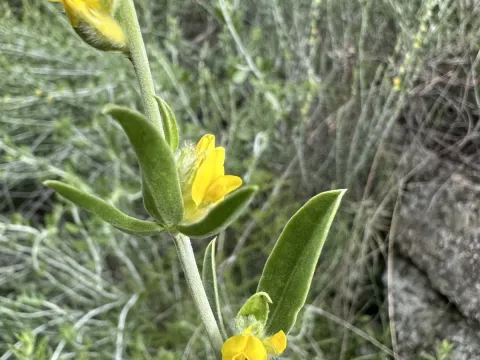
Anthyllis cytisoides
Anthyllis cytisoides
Anthyllis cytisoides is a perennial shrub belonging to the Fabaceae family, characterized by its semi-woody growth habit. It is native to the Mediterranean basin, where it thrives in harsh, dry environments.
What the section contains
Anthyllis cytisoides
The plant is highly drought-tolerant, making it an excellent candidate for agricultural use in arid and semi-arid regions. Its deep taproot allows it to survive long periods of water scarcity.
It prefers well-drained, lime-rich, or stony soils and requires full sun exposure to flourish. The plant does not tolerate waterlogged conditions or high-humidity environments, which can lead to rapid decline.
Climatic requirements are specific to regions with mild winters, as the plant has limited frost tolerance. Protection from harsh winds and freezing temperatures is necessary in colder latitudes.
Cultivation practices involve minimal intervention. As a legume, it fixes atmospheric nitrogen through symbiotic bacteria, naturally enhancing soil fertility and reducing the need for chemical fertilizers.
The primary agricultural use of this plant is as a browse species for livestock, particularly goats and sheep. It provides a nutritious and palatable forage source when other grasses are dormant.
It demonstrates good regrowth capacity after light to moderate grazing, allowing for sustainable management of arid pastures throughout the growing season.
Beyond its value as fodder, Anthyllis cytisoides plays a crucial role in soil conservation. It is frequently planted to stabilize slopes and prevent soil erosion in degraded landscapes.
The species is often integrated into land reclamation projects because it improves soil structure and nutrient availability through its root system and litter fall.
It serves as a beneficial plant for biodiversity, acting as a nectar source for pollinators during its flowering phase, which supports local insect populations in farming areas.
Fungal diseases, including powdery mildew, represent the most common health risk for the crop, especially in conditions with stagnant air or excessive moisture.
Various insect pests, such as aphids and curculionid beetles, can attack the foliage and stems during the spring, potentially reducing biomass production.
Overgrazing is a significant threat to the longevity of the shrub. If the plant is continuously browsed without recovery periods, its health declines, making it susceptible to disease.
Root rot is prevalent in fields with poor drainage or heavy, clay-rich soils. Managing soil texture is essential for long-term survival of the crop.
Integrated pest management, combined with rotational grazing schedules, is recommended to mitigate these threats and ensure the long-term productivity of the fields.