
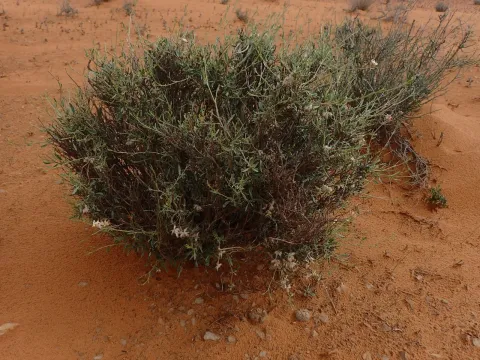
Anthyllis henoniana
Anthyllis henoniana
Anthyllis henoniana is a perennial herbaceous plant belonging to the legume family (Fabaceae). It is a specialized species native to arid environments, perfectly adapted to survival in extreme drought conditions.
What the section contains
Anthyllis henoniana
The plant exhibits xerophytic characteristics, including dense pubescence on its leaves and stems, which helps to minimize water loss through transpiration in high-heat environments.
This species thrives in light, sandy, or loamy soils with low organic matter content. It is known for its tolerance to saline soil conditions, making it a valuable candidate for land reclamation in arid areas.
Anthyllis henoniana requires full sun exposure for healthy development. The plant is highly sensitive to waterlogging and demands excellent soil drainage to prevent root decay.
The natural distribution of this species is found in the arid regions of North Africa. It serves an essential role in stabilizing mobile sands and preventing wind erosion in desertified landscapes.
Sowing in agricultural settings is typically carried out in early spring, immediately following the onset of stable warm temperatures. Seed scarification is recommended to improve germination rates.
The seeds should be sown at a shallow depth of 1–2 centimeters. Proper seedbed preparation is vital to ensure optimal contact with the soil for successful germination.
Planting density varies based on the intended use: higher densities are used for soil stabilization projects, while wider spacing is preferred for seed production to facilitate growth.
Young seedlings are sensitive during the initial establishment phase and require protection from invasive weeds, which can outcompete the young plants for limited moisture.
Once the taproot system is established, the plant becomes exceptionally drought-hardy and requires no further irrigation, utilizing water reserves deep within the soil profile.