
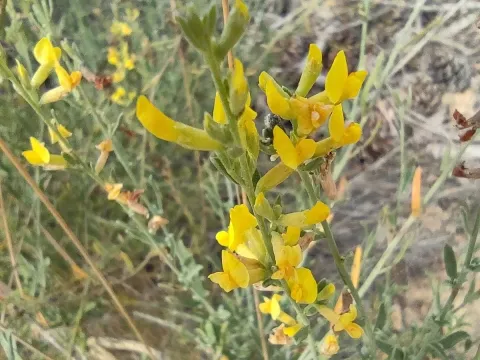
Anthyllis terniflora
Anthyllis terniflora
Anthyllis terniflora, commonly known as a member of the Fabaceae family, is a perennial herbaceous plant valued for its exceptional ability to thrive in challenging environmental conditions.
What the section contains
Anthyllis terniflora
Native to the Mediterranean basin, it is typically found in arid habitats, including limestone slopes and dry, rocky soils. Its distribution reflects its adaptation to low-water availability and alkaline soil profiles.
The plant exhibits high tolerance for poor soil quality, making it an excellent candidate for restoration projects on degraded lands. It efficiently fixes nitrogen, which plays a crucial role in improving the nutrient status of the soil for companion crops.
Regarding climatic needs, Anthyllis terniflora requires full sun exposure and well-drained soils. It is highly drought-tolerant, owing to a deep root system that accesses moisture in deeper soil layers.
In agricultural settings, it is primarily used as a component of perennial pastures and for erosion control. It effectively stabilizes the soil surface while providing a source of forage for livestock.
The sowing process should be initiated in early spring to take advantage of soil moisture reserves. Proper timing ensures that the root system develops sufficiently before the onset of summer heat.
Seedbed preparation is vital; the soil should be loosened to allow for easy root penetration, but it must be firmed after sowing to promote capillary movement of water to the seeds.
Seed depth should be kept shallow, generally between 1 and 2 centimeters. Deep sowing may prevent germination or delay emergence, leading to a weak and non-uniform stand of plants.
Using a seed drill with depth control mechanisms is recommended for large-scale operations. For smaller areas, broadcast seeding followed by light harrowing and rolling is an effective method.
During the establishment phase, managing weed pressure is essential. Because Anthyllis terniflora has a slow initial growth rate, early competition from weeds can significantly reduce plant vigor.
The crop is generally robust, but root rot can become a significant problem in fields with poor drainage. Waterlogging is the primary environmental factor that predisposes plants to fungal infections.
Pests, particularly nodule weevils, can cause damage by feeding on the leaves and root system. Regular scouting is required during the vegetative growth phase to assess the need for intervention.
Powdery mildew is a potential threat, especially in humid or stagnant air conditions. Improving plant spacing can facilitate better airflow and reduce the incidence of such diseases.
Integrated Pest Management (IPM) strategies are strongly encouraged, as the plant is a beneficial source of pollen and nectar for pollinators. Avoid broad-spectrum insecticides that harm non-target beneficial insects.
Maintaining a clean, well-drained environment and choosing suitable companion crops are the best cultural methods to minimize the impact of biotic stresses on the plantation.