
Anthyllis hystrix
Anthyllis hystrix
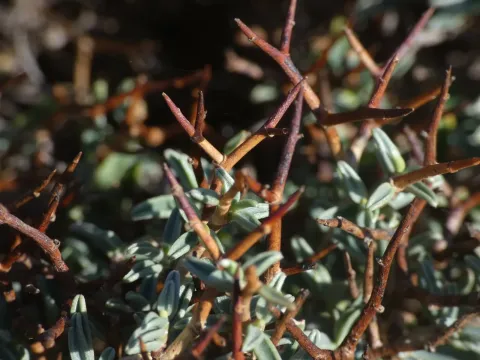
Anthyllis hystrix, known as the spiny kidney vetch, is a perennial legume species primarily endemic to the Balearic Islands. It has evolved to survive in harsh, rocky Mediterranean coastal habitats, demonstrating remarkable xerophytic traits.
What the section contains
Anthyllis hystrix
The plant features a compact, shrub-like growth habit with hardened stems that provide structural integrity against strong winds and physical stress. Its silver-green foliage is densely covered with trichomes to reflect intense solar radiation.
Agronomically, this species thrives in well-drained, alkaline limestone-based soils. It lacks tolerance for waterlogged conditions, making proper slope selection and soil aeration critical for successful cultivation in non-native environments.
Temperature requirements are centered around Mediterranean conditions, with the plant showing high tolerance for intense heat and drought. It requires full sunlight exposure to maintain its characteristic compact form and promote blooming.
Regarding its utility, Anthyllis hystrix is primarily utilized for land reclamation, soil stabilization in fragile environments, and as a specialized ornamental plant in xeriscaping projects due to its unique architectural appearance.
The most significant threat to the health of Anthyllis hystrix is improper irrigation management, which leads to root and crown rot pathogens, significantly reducing plant longevity.
Powdery mildew infections can occur during periods of high humidity combined with stagnant air, necessitating regular pruning to ensure proper canopy ventilation.
Insect pests, including various species of weevils and aphids, are known to target leguminous plants, often causing direct damage to the leaves and developing seed pods.
Seed-feeding insects pose a major challenge for propagation, as they can consume a large percentage of the yield, reducing the viability of future sowing materials.
Integrated pest management strategies focusing on dry-culture techniques and biological controls are recommended to maintain healthy stands without excessive chemical application.