
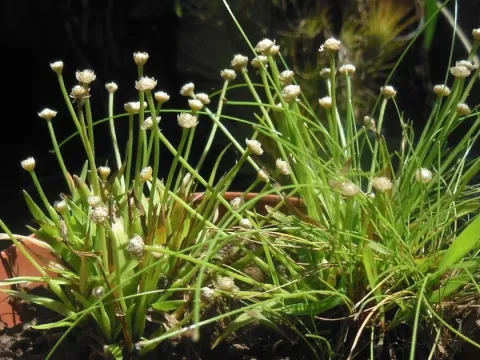
Eriocaulon longifolium
Eriocaulon longifolium
Eriocaulon longifolium is a unique species belonging to the Eriocaulaceae family, known for its distinct rosette growth pattern and delicate, long leaves. Originating from tropical wetlands, this species requires specific environmental conditions to thrive in artificial settings such as aquariums or high-tech paludariums.
What the section contains
Eriocaulon longifolium
The plant strictly requires soft, acidic water with a low KH value. Maintaining a pH between 5.5 and 6.5 is essential for nutrient absorption, as high alkalinity often leads to the accumulation of mineral deposits on the leaf surfaces, hindering the plant's ability to breathe and process light.
High-intensity LED lighting is a prerequisite for successful cultivation. The plant's metabolism relies on efficient photosynthesis to sustain its dense leaf structure; therefore, providing a high-quality light spectrum for 10–12 hours daily is highly recommended.
The substrate must be nutrient-rich and porous. Using a professional aquatic soil that supports cation exchange capacity allows the plant's roots to access nitrogen, phosphorus, and potassium effectively. A compact, fine-grained soil that does not easily compact is preferred for healthy root development.
Consistent CO2 injection is necessary to drive the plant's growth. Without supplemental carbon, the species will fail to establish a strong root system and may stop growing entirely. It is a slow-growing plant that demands stability in both water chemistry and lighting duration.
The primary threat to Eriocaulon longifolium is the outbreak of algae. Due to its slow growth rate, the plant is highly susceptible to algae overgrowth, such as hair or spot algae, which can rapidly cover its narrow leaves and deprive them of light, leading to quick degradation.
Substrate hypoxia (low oxygen in the soil) is a common cause of death for this species. If the substrate becomes too packed or organic debris accumulates too much, anaerobic bacteria develop, leading to root rot that spreads rapidly through the rhizome and destroys the plant.
Nutrient imbalances, particularly high nitrate or phosphate levels, can cause the plant to stop growing and lose its vibrant color. A well-managed fertilization schedule focusing on micro-nutrients, particularly iron and magnesium, is vital to prevent chlorosis and leaf yellowing.
In humid terrestrial setups (paludariums), pests like spider mites or aphids can pose a significant threat during periods of low air humidity. Regular misting with pure water and maintaining high humidity levels are essential preventive measures.
Competition from fast-growing stem plants is a subtle but constant danger. Because Eriocaulon longifolium needs full exposure to light, aggressive pruning of neighboring species is required to ensure that the Eriocaulon is not overshadowed and stays competitive in the ecosystem.