
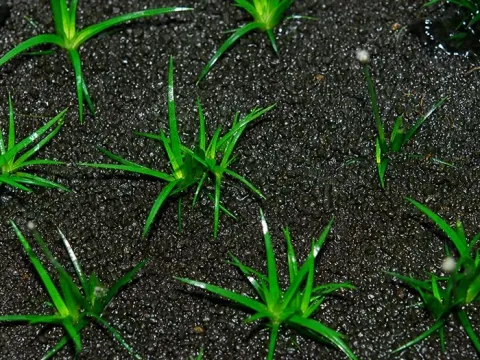
Eriocaulon echinulatum
Eriocaulon echinulatum
Eriocaulon echinulatum is a distinctive species within the Eriocaulaceae family, originating from the wetlands of Southeast Asia. This species is highly regarded for its compact, needle-like leaf structure forming dense rosettes.
What the section contains
Eriocaulon echinulatum
The plant demonstrates a strong preference for soft, acidic water conditions, making it an advanced species for enthusiasts. In agricultural or aquascaping settings, the substrate must be rich in nutrients to support its extensive root system.
High levels of dissolved CO2 are essential for the healthy metabolism of this plant. Consistent injection of carbon dioxide helps the species maintain its structural integrity and vibrant coloration in a controlled environment.
Intense light intensity is required to prevent the plant from stretching or losing its characteristic compactness. Providing a full-spectrum light source for 8–10 hours per day is recommended for optimal development.
Temperature management is another crucial factor for Eriocaulon echinulatum. Maintaining a constant temperature between 22°C and 26°C helps prevent physiological stress and ensures the plant remains in a vegetative, growth-oriented phase.
The primary threat to this plant is poor water circulation combined with organic buildup in the substrate. This leads to hypoxic conditions around the roots, causing decay and eventual loss of the entire rosette.
Furthermore, nutrient deficiencies, particularly iron (Fe) and trace minerals, can cause rapid foliage yellowing. Regular supplementation using specialized liquid fertilizers or root tabs is necessary to avoid chlorosis and growth retardation.