
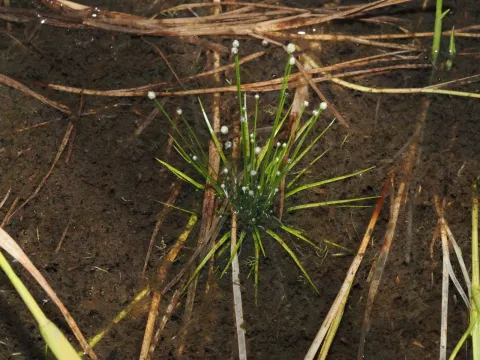
Eriocaulon formosanum
Eriocaulon formosanum
Eriocaulon formosanum belongs to the Eriocaulaceae family and is a prized ornamental plant native to Taiwan. It thrives in high-humidity, subtropical environments, typically rooting in nutrient-rich, aquatic substrates near water bodies.
What the section contains
Eriocaulon formosanum
Botanically, the plant features a dense rosette of narrow, needle-like leaves. Its root system is delicate yet extensive, necessitating a fine-grained, permeable substrate to facilitate efficient nutrient uptake and gas exchange for the roots.
Successful cultivation requires high-intensity lighting conditions. The plant utilizes light efficiently for its metabolic processes; therefore, a high-quality light source with a consistent daily photoperiod is fundamental to maintaining its signature compact, green appearance.
CO2 supplementation is a critical component of the care regime. As a species accustomed to high-metabolic environments, it requires dissolved CO2 to sustain its physiological functions and to ensure consistent growth throughout the year.
Water chemistry plays a vital role in its development. The plant prefers soft, slightly acidic water conditions. Maintaining a stable balance of essential minerals is necessary, as sudden fluctuations in water parameters can lead to significant stress and leaf tissue damage.
Algal blooms pose the most significant threat to the plant's health. Filamentous and hair algae can quickly colonize the rosette, effectively choking the plant by blocking light and nutrient access from the water column.
Substrate compaction and anaerobic conditions in the soil represent further risks. If the substrate is not properly aerated, the root system will quickly rot, leading to a rapid decline in the plant's overall vitality and eventual mortality.