
Ervatamia
Ervatamia
Description
Growing requirements
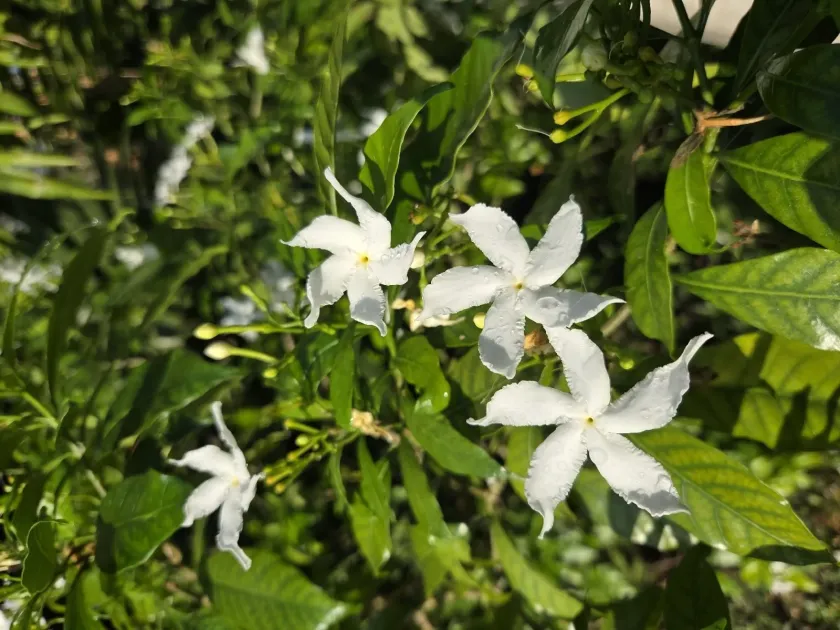
Ervatamia, currently synonymous with the genus Tabernaemontana, is a prominent member of the Apocynaceae family. These plants are recognized as evergreen shrubs or small trees that produce fragrant, star-shaped white flowers, often used in ornamental horticulture.
Originating from the tropical regions of Asia and Australia, the plant thrives in humid environments with high temperatures. In temperate zones, it is strictly managed as a greenhouse or indoor ornamental, as it cannot survive exposure to frost or cold winds.
Optimal growth requires a temperature range of 18 to 25 degrees Celsius. Humidity is a critical factor for successful cultivation; maintaining a high level of ambient moisture is essential to prevent the foliage from drying out or losing its glossy texture.
The potting medium must be porous and well-draining to accommodate the plant's sensitivity to waterlogging. A mixture consisting of peat moss, pine bark, and coarse perlite or sand creates an ideal environment that promotes healthy root development.
Adequate sunlight is necessary for flowering, preferably filtered bright light. While the plant appreciates morning sun, direct afternoon exposure during the hottest months should be avoided to prevent leaf scorch and dehydration of the plant tissues.
Main diseases and pests
Common pests affecting Ervatamia include mealybugs, scale insects, and spider mites, which thrive in indoor environments with poor air circulation. Root rot remains the primary pathological threat, typically caused by overwatering or soil that remains saturated for extended periods.