
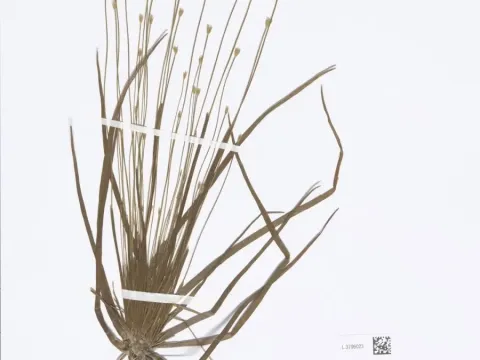
Eriocaulon Hondoense
Eriocaulon hondoense
Eriocaulon Hondoense is a sophisticated aquatic plant from the Eriocaulaceae family. It is highly valued in the aquascaping community for its dense, grass-like rosettes that add a unique architectural dimension to any layout.
What the section contains
Eriocaulon Hondoense
The species originates from Japan, where it typically inhabits wetlands and acidic, nutrient-poor water bodies. This historical adaptation necessitates precise environmental control when kept in home aquaria.
The plant requires high light intensity to maintain its characteristic compact shape and vibrant green coloration. Without adequate photons, the rosette tends to lose its density, and leaves become elongated and brittle.
Robust CO2 injection is essential for the healthy growth of Eriocaulon Hondoense. It acts as the primary catalyst for metabolic processes, allowing the plant to absorb essential minerals efficiently from the water column and substrate.
A nutrient-rich substrate, specifically designed for aquatic plants, is vital for long-term health. The root system is the primary nutrient uptake point; therefore, the substrate must be kept porous to ensure good oxygen exchange and nutrient absorption.
The most common threat is the accumulation of organic waste in the substrate, which leads to root rot. To prevent this, hobbyists must maintain excellent water flow and regular maintenance of the filtration system.
Algae infestations pose a significant danger to this slow-growing plant. Since Eriocaulon Hondoense grows relatively slowly, it cannot compete with fast-growing algae if the nutrient balance in the water becomes unstable.
Improper water chemistry, specifically high carbonate hardness (kH), often causes the plant to stall. High levels of dissolved minerals can interfere with nutrient uptake, leading to yellowing leaves and tissue necrosis.
Iron deficiency is another major threat that manifests quickly through interveinal chlorosis. If the plant shows signs of pale color, localized iron supplementation is required to restore its health and photosynthesis efficiency.
Physical damage to the central crown of the rosette is often irreparable. Care should be taken during tank maintenance to avoid burying the crown in the substrate or disturbing the plant, as it may struggle to recover from mechanical stress.