
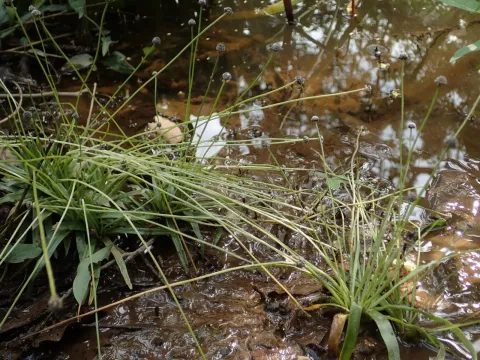
Eriocaulon nepalense
Eriocaulon nepalense
Eriocaulon nepalense is a perennial herbaceous plant belonging to the Eriocaulaceae family. It is native to the tropical and subtropical regions of Asia, specifically inhabiting damp, boggy environments in Nepal and neighboring countries.
What the section contains
Eriocaulon nepalense
The plant is characterized by a dense, needle-like rosette of leaves and distinctive white, globular flower heads on long stalks. Its aesthetic appeal makes it a popular specimen for high-end aquatic landscapes.
Success in cultivation depends on providing soft water with low carbonate hardness. The species thrives in environments where pH levels are maintained slightly below neutral, simulating its natural acidic habitats.
High-intensity lighting is essential to ensure the plant maintains its characteristic compact, rosette growth form. Without adequate light, the plant tends to lose its structural integrity and vitality.
A nutrient-rich substrate is mandatory, as this species primarily absorbs nutrients through its root system. Providing a specialized aquatic soil ensures the necessary availability of micronutrients required for healthy growth.
Algal overgrowth is the most significant threat to the health of Eriocaulon nepalense. Due to its relatively slow growth rate, the plant can easily be smothered by algae if nutrient levels in the water column are not carefully managed.
Carbon dioxide deficiency is a major physiological threat. A consistent supply of CO2 is required to maintain the photosynthetic rate, without which the plant will exhibit signs of stunted growth.
Root rot, often caused by stagnant or poorly oxygenated substrate, can lead to the rapid decline of the plant. Maintaining proper circulation within the substrate layer is a critical maintenance task.
Micronutrient deficiencies, particularly of iron, manifest as chlorosis in the leaves. If the leaf tips begin to turn translucent or decay, it indicates an immediate need for localized nutrient adjustment.
Physical damage from fauna, such as snails or crustaceans, can compromise the integrity of the rosette. Such wounds serve as entry points for bacterial infections, which can destroy the specimen entirely.