
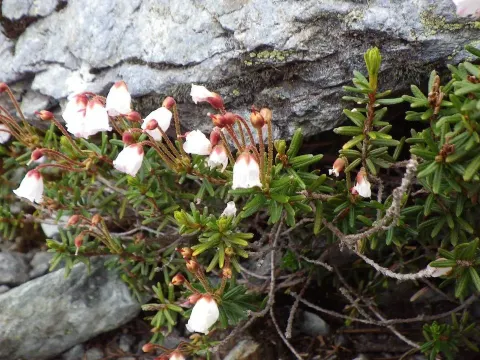
Phyllodoce nipponica
Phyllodoce nipponica
Phyllodoce nipponica, commonly known as the Japanese mountain heath, is an evergreen dwarf shrub belonging to the Ericaceae family. It is native to the alpine regions of Japan, thriving in harsh mountain environments.
What the section contains
Phyllodoce nipponica
The successful cultivation of this species requires a specific microclimate characterized by high air humidity and consistent soil moisture. It is best suited for rock gardens that mimic high-altitude conditions.
The substrate must be highly acidic, porous, and organic. A mixture of peat moss, pine bark, and fine gravel provides the ideal environment for the sensitive, fine root system of this culture.
Temperature management is critical for Phyllodoce nipponica. It performs best in regions with cool summers and requires a well-drained site to prevent the roots from overheating or waterlogging.
Exposure should be limited to morning sun. Afternoon shade is essential to protect the delicate foliage from desiccation and the intense heat that can stunt the plant's growth.
Root rot is the most significant threat to this species. It is primarily caused by poor drainage and excessive irrigation, leading to the rapid decay of the vascular tissues in the roots.
Spider mites represent the main pest concern, particularly during hot and dry spells. These pests colonize the undersides of the leaves, causing chlorosis and eventual leaf drop.
Fungal pathogens such as rust or leaf spot diseases may occur if the plant is maintained in an area with poor airflow or stagnant humidity, necessitating periodic fungicide application.
Nutrient deficiency or toxicity is often a result of improper pH levels. Since the plant is acid-loving, the use of alkaline water will cause nutrient lockout, manifesting as yellowing foliage.
Competition from weeds and fast-growing groundcovers can suppress Phyllodoce nipponica; therefore, maintaining a clear, mulched perimeter around the plant base is vital for its long-term survival.