
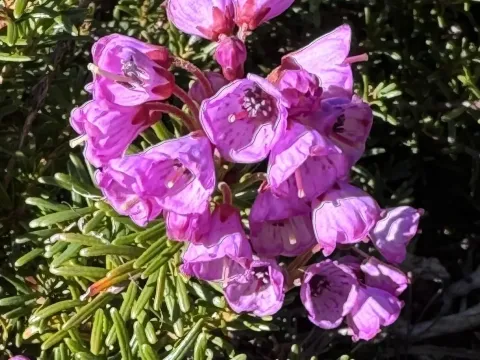
Phyllodoce empetriformis
Phyllodoce empetriformis
Phyllodoce empetriformis, commonly known as pink mountain heather, is a low-growing evergreen shrub within the Ericaceae family. Native to the mountainous regions of western North America, it thrives in cool alpine environments.
What the section contains
Phyllodoce empetriformis
The plant features needle-like leaves and attractive bell-shaped pink to purple flowers that appear in spring and summer. It forms a dense, mat-like growth habit, making it an excellent candidate for specialized landscaping and alpine garden designs.
To succeed in cultivation, gardeners must provide highly acidic, organic-rich, and well-draining soil. An ideal planting mix includes peat moss, pine bark, and perlite or sand to ensure the root system stays aerated and does not sit in standing water.
The plant prefers cool, humid conditions and struggles in environments with extreme heat or prolonged drought. Providing a location with partial shade, especially during the hottest part of the day, is crucial to prevent physiological stress.
Regular maintenance involves applying mulch such as pine needles or wood chips around the base. This practice helps maintain the necessary soil acidity, suppresses weeds, and preserves moisture in the root zone throughout the growing season.
The primary threats to Phyllodoce empetriformis are fungal infections, particularly root rot, caused by poor drainage and excessive soil moisture. Implementing an aggressive drainage strategy at the planting stage is the best preventative measure.
Pests like spider mites can become an issue in hot and dry climates, damaging the foliage by sucking nutrients. Frequent inspection and the use of insecticidal soaps or oils are standard treatments when an infestation is detected.
Soil pH levels above the optimal range are detrimental, leading to nutrient lockout and subsequent chlorosis. Regular testing and the use of elemental sulfur can help adjust the environment to suit the plant's ericaceous requirements.
Physical damage to the root system is a common cause of decline, as the roots are shallow and sensitive. It is recommended to avoid any digging or mechanical weeding in the immediate vicinity of the shrub's crown.
Winter desiccation is a potential threat in windy or exposed areas. Protecting the evergreen foliage with light burlap wraps or ensuring adequate ground moisture before the first deep freeze can help the plant survive harsh winter conditions.