
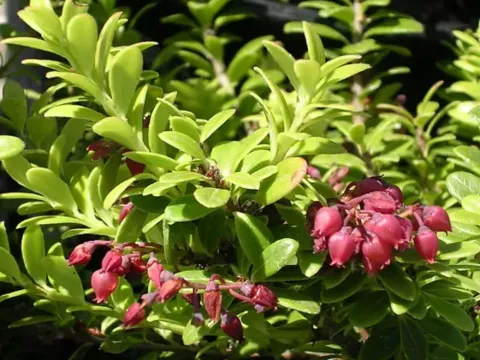
Vaccinium moupinense
Vaccinium moupinense
Vaccinium moupinense is a distinctive evergreen shrub belonging to the Ericaceae family. Native to the mountainous regions of China, it is prized for its compact habit and attractive foliage, making it a specialty plant for collectors.
What the section contains
Vaccinium moupinense
To cultivate this species successfully, gardeners must provide highly acidic, well-draining soil. A substrate rich in organic matter, such as peat moss or pine bark, is ideal for replicating its natural mountainous habitat.
The plant thrives in semi-shaded environments. Direct sunlight, especially in mid-afternoon, can cause stress to the leaves. Proper placement in the garden or greenhouse is crucial to ensure the plant maintains its vibrant evergreen color throughout the year.
Watering requirements are specific: the root zone must remain consistently moist but never waterlogged. Excellent drainage is essential, as the fine root system of this blueberry relative is highly susceptible to rot in stagnant conditions.
Maintenance involves periodic mulching with organic materials to retain soil moisture and stabilize root temperatures. It is imperative to use fertilizers specifically formulated for acid-loving ericaceous plants to avoid pH imbalances.
Like many species in the genus Vaccinium, this plant can be affected by specific fungal diseases if the moisture levels are not managed correctly. Root rot is the most common threat resulting from poor drainage.
Pests such as spider mites may occasionally infest the plant, particularly in environments with low humidity. Regular inspection of the undersides of the leaves is recommended to catch early signs of infestation.
In humid or stagnant conditions, leaf spots caused by fungal pathogens can appear. Preventive measures include ensuring good air circulation around the shrub and avoiding overhead irrigation that leaves foliage wet for extended periods.
Scale insects can also be a nuisance, attaching themselves to the stems. If detected, physical removal or the application of horticultural oils should be performed with caution to avoid damaging the sensitive evergreen foliage.
Protecting the plant from extreme temperature fluctuations is also a form of protection. During harsh winter months, shielding the plant from cold, desiccating winds prevents foliage burn and dieback.