
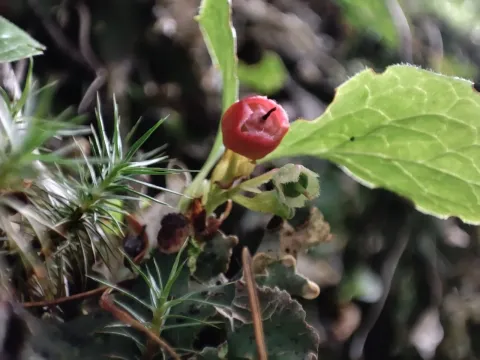
Vaccinium praestans
Vaccinium praestans
Vaccinium praestans, commonly known as the red-leaved blueberry or 'krasnika', belongs to the Ericaceae family. It is a low-growing dwarf shrub, typically reaching only 15 centimeters in height, and is endemic to the coastal regions and high mountains of the Russian Far East.
What the section contains
Vaccinium praestans
The plant thrives in cool, humid maritime climates where temperatures remain moderate during the summer months. It naturally inhabits shaded, mossy forest floors where the air stays cool and moisture is consistently available to the root system throughout the season.
Cultivation requires specific soil conditions, specifically a highly acidic environment with a significant amount of organic matter. Peaty or podzolic soils mixed with pine needles or peat moss are essential to mimic the plant's natural habitat and provide the necessary pH level.
Agricultural techniques must focus on maintaining constant soil moisture without causing waterlogging, which can prove fatal to the plant. Mulching with acidic materials like pine bark or sawdust is highly recommended to regulate temperature and suppress weed growth.
Propagation is primarily vegetative through extensive underground rhizomes, allowing the plant to spread horizontally to form dense mats. Growing the species from seeds is challenging due to low germination rates and the extremely slow growth cycle in the first few years.
The fruit of Vaccinium praestans is a succulent, bright red berry approximately 1 centimeter in diameter, prized for its unique tart-sweet flavor and intense aroma. Yields are highly dependent on the stability of the local microclimate and protection from extreme summer heat.
Economically, the fruit is highly valued for its dense concentration of organic acids, Vitamin C, and glycosides, making it a functional food. It is widely used in the production of juices, jams, and traditional medicines for regulating blood pressure and improving vitality.
Commercial farming remains limited due to the plant's rigorous ecological demands, which are difficult to replicate on a large industrial scale. Currently, most production relies on sustainable management of natural wild stands rather than traditional field agriculture.
Efforts to increase yields often involve creating artificial 'semi-natural' plantations in forest clearings where the microclimate can be managed. By increasing the density of the shrubs in these controlled areas, growers can significantly boost output per unit area.
Because the berries are extremely delicate and prone to rapid spoilage after harvesting, their commercial lifecycle is short. Rapid processing or freezing is required immediately after picking to preserve the berries' complex flavor profile and nutritional profile.
The species is susceptible to various fungal infections such as gray mold and leaf spot, especially in environments with poor air circulation and excessive humidity. Regular sanitation of the growing site by removing dead plant matter is crucial for disease control.
Pests, including certain leaf-eating insects and small rodents, can cause significant damage to both the foliage and the fruit. Rodents, in particular, pose a threat to the underground rhizomes during the colder months when they seek food sources.
Pest management relies on integrated biological control methods rather than synthetic pesticides, to which the plant is highly sensitive. Maintaining proper spacing between individual shrubs helps reduce the spread of disease within the planting area.
Chlorosis is a frequent issue caused by incorrect soil pH, which weakens the plant's immunity and makes it more vulnerable to pathogens. Frequent soil analysis is necessary to ensure that the acidic conditions are maintained at the correct level throughout the growing season.
In cases of severe infestation, immediate removal and disposal of infected plant material are standard protocols. Preventive measures, such as proper drainage and avoiding overhead watering, are essential to minimize the risk of recurring infections in a commercial setting.
The harvest period typically occurs from late August to late September, depending on the climatic conditions of the season. Berries do not ripen uniformly, requiring multiple picking passes across the planting site to ensure that only fully mature fruits are gathered.
Harvesting is performed entirely by hand due to the fragile nature of the berries, which crush easily under even minor pressure. Mechanized harvesting is currently non-viable as it would result in massive losses due to fruit damage and juice leakage.
Berries must be collected during dry weather, as wet fruit is prone to immediate rot. Once picked, they are placed in shallow, well-ventilated containers to prevent stacking, which can cause the bottom layers to burst and spoil.
Quality sorting is done during the harvest process to remove immature, overripe, or damaged berries. Maintaining high standards during the harvest is essential for producing high-quality consumer products and extending the shelf life of the fresh berries.
Following collection, the fruit is typically processed immediately via flash-freezing or preservation with sugar. These traditional methods ensure that the unique sensory properties of the Vaccinium praestans berries remain intact for consumption throughout the year.