
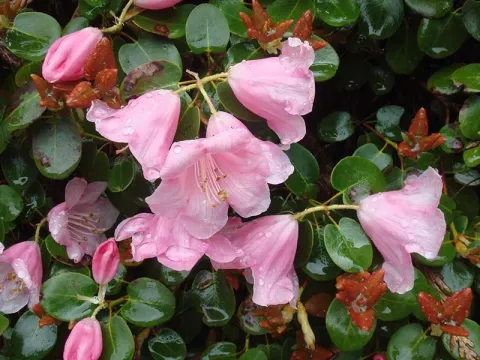
Williams rhododendron
Rhododendron williamsianum
Williams rhododendron (Rhododendron williamsianum) belongs to the Ericaceae family. It is a compact, evergreen shrub known for its beautiful bell-shaped, rose-pink flowers and heart-shaped foliage.
What the section contains
Williams rhododendron
The species originates from the mountainous regions of China. Its natural habitat is characterized by cool, misty environments and well-drained, acidic soil rich in organic matter.
To cultivate this species successfully, it is essential to provide acidic soil with a pH between 4.5 and 5.5. A mixture of peat moss, pine needles, and horticultural sand creates the ideal growing medium.
Regarding climate, this rhododendron thrives in partial shade. Direct, harsh sunlight can scorch the leaves, while full shade may result in fewer blooms, so a dappled light environment is perfect.
Consistent maintenance includes mulch application to maintain soil moisture and cool root temperatures. Irrigation should be done using soft water, as tap water with high mineral content can alter the soil acidity over time.
The most common disease threat is root rot caused by poor soil drainage. Ensuring that the planting site has excellent aeration and drainage is the primary defense against such fungal pathogens.
Pests that frequently affect this plant include vine weevils, lace bugs, and spider mites. Regular scouting of the underside of the leaves is recommended, followed by targeted application of appropriate pest control products if necessary.