
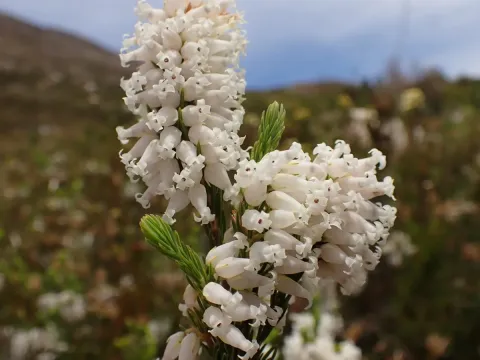
White heath
Erica albens
White heath (Erica albens) is a shrubby plant belonging to the Ericaceae family. Native to the Cape region of South Africa, this species thrives in environments characterized by moderate temperatures and specific humidity patterns suitable for its growth cycle.
What the section contains
White heath
This crop requires well-drained, acidic soils rich in organic matter. A fundamental requirement for the healthy growth of this plant is the prevention of water stagnation, as the root system of the Erica is highly sensitive to waterlogging and prone to fungal decay.
The plant is photophilic; however, under intense sunlight, it requires regular irrigation with soft, slightly acidified water. In regions with cold winters, Erica albens is typically grown as a potted or greenhouse plant due to its extremely low winter hardiness.
Botanically, Erica albens is characterized by narrow, needle-like leaves and small, bell-shaped flowers typical of the genus. During the flowering period, these blooms densely cover the stems, providing high ornamental value for landscaping and floral design.
The economic use of Erica albens is focused primarily on the ornamental horticultural sector. It is prized for its extended flowering season and its ability to adapt to container gardening, provided that strict agronomic standards for substrate acidity are maintained.
The primary threats to the health of Erica albens are fungal diseases that develop due to excessive moisture in the air and soil. Root rot is particularly dangerous, as it is nearly impossible to mitigate once the disease has reached advanced stages of development.
Among the pests that pose a potential threat to the crop, the two-spotted spider mite and mealybug are the most significant. Under greenhouse conditions, pest infestations can spread rapidly, necessitating strict phytosanitary management and monitoring.
Disease prevention is based on ensuring adequate air circulation in the growing area and strictly controlling the composition of irrigation water. Using alkaline water leads to iron chlorosis in the foliage, which weakens the plant's natural immune system against secondary infections.
Regular pruning serves as a vital sanitary practice to remove potential infection hotspots and improve airflow within the canopy. This agronomic technique is essential for maintaining the vigor of Erica plantings in both industrial and private nurseries.
When pests are detected, the application of systemic acaricides and insecticides is recommended. However, it is crucial to adhere to precise dosage guidelines, as Ericas are known to react negatively to high concentrations of chemical agents within their growing medium.