
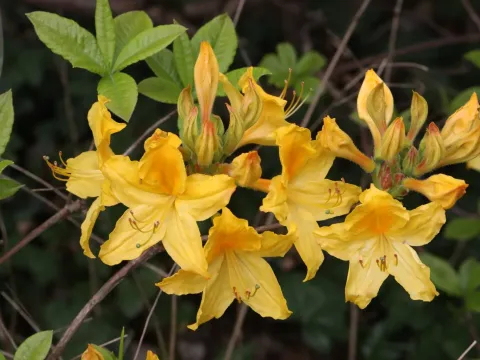
Yellow azalea
Rhododendron luteum
Rhododendron luteum, commonly known as the yellow azalea, is a deciduous shrub belonging to the Ericaceae family. Native to Southeastern Europe and Western Asia, this plant is highly valued for its striking yellow flowers and intense fragrance.
What the section contains
Yellow azalea
The primary agricultural requirement for this species is highly acidic soil, typically ranging from pH 4.5 to 5.5. The root system is fibrous and shallow, necessitating a substrate that is both moisture-retentive and exceptionally well-draining.
Climate adaptation is a key factor, as the plant thrives in cool, humid environments. In regions with warmer climates, it requires partial shade to protect its leaves from excessive heat and transpiration stress during midday.
Maintenance involves routine mulching with organic material such as pine needles or peat. This practice mimics the natural forest floor habitat, stabilizes soil temperature, and helps maintain the required acidity levels.
Pruning should be performed sparingly, mainly to remove dead or diseased branches after the flowering season concludes. This ensures the plant directs its energy towards next year's flower buds rather than excessive foliage growth.
Phytophthora root rot is one of the most severe threats to the health of the plant. It occurs primarily in poorly drained soils and can lead to the rapid decline and death of the entire shrub.
The rhododendron lace bug is a common pest that feeds on the undersides of leaves, causing a stippled, greyish-white appearance on the upper surface. Infestations often weaken the plant, making it susceptible to secondary infections.
Black vine weevils can also cause significant damage by feeding on foliage as adults and consuming roots as larvae. Effective control often requires the use of beneficial nematodes or targeted soil treatments.
Leaf spot diseases, caused by various fungi, may occur during wet, humid springs. Keeping the foliage as dry as possible and ensuring adequate air circulation around the shrub are essential cultural controls.
Integrated pest management, including monitoring and localized treatments, is recommended to keep the plants vibrant. Keeping the shrub healthy through proper fertilization and watering is the best defense against major infestations.