
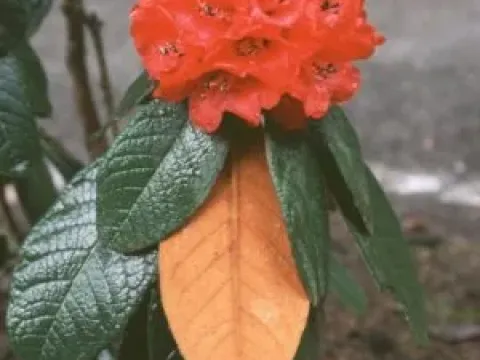
Woolly-leaved rhododendron
Rhododendron mallotum
The woolly-leaved rhododendron (Rhododendron mallotum) is an evergreen shrub belonging to the Ericaceae family. It is native to the high-altitude regions of Yunnan province, China, where it thrives in alpine environments at elevations between 3,000 and 4,000 meters, making it a robust species for specific temperate climates.
What the section contains
Woolly-leaved rhododendron
Botanically, this shrub is distinguished by its leathery leaves covered on the undersides with a thick, reddish-brown, woolly indumentum. This feature not only serves as an adaptation to retain moisture and protect the leaf surface but also provides significant year-round ornamental value to the plant, which can grow up to 3–4 meters in height.
Agronomic success with this species depends on mimicking its natural habitat. It requires a highly acidic soil profile with a pH between 4.5 and 5.5. The substrate must be exceptionally well-drained, porous, and rich in organic matter, typically created using a blend of peat moss, decomposed pine bark, and coarse sand.
Climate requirements include protection from excessive wind and scorching sun. While the plant is hardy, it benefits from a cool and humid atmosphere. Providing a thick layer of mulch around the root zone is crucial to keep the soil temperature stable and prevent the fine, fibrous root system from drying out during warmer months.
As a horticultural subject, it is prized by collectors and landscape professionals for its sculptural foliage and stately presence. While it is not a commercial agricultural crop in the traditional sense, its maintenance requires a strict professional approach to fertilization (using acid-loving plant formulas) and pruning to maintain its aesthetic form.
The primary threats include phytophthora root rot, which is often fatal if soil drainage is insufficient. Ensuring that the crown of the plant is slightly raised during planting can prevent water from pooling at the base and significantly reduce the risk of this infection.
Insect pests, specifically the rhododendron lace bug and spider mites, are common nuisances that cause stippling on the upper leaf surfaces. Integrated pest management, including regular monitoring and the use of horticultural oils or systemic insecticides, is necessary to keep the foliage healthy and vigorous.