
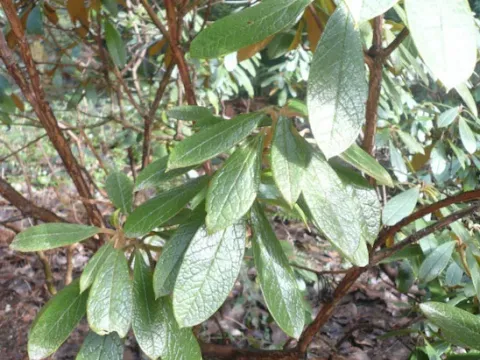
Wilton's rhododendron
Rhododendron wiltonii
Wilton's rhododendron (Rhododendron wiltonii) is a member of the Ericaceae family, prized by gardeners for its high winter hardiness and distinct evergreen foliage. Native to the mountain forests of China, specifically in the Sichuan and Yunnan provinces, it thrives in cool, humid environments at elevations between 2,000 and 3,000 meters.
What the section contains
Wilton's rhododendron
Botanically, this species is defined by its thick, leathery leaves which possess a unique feature: a dense, reddish-brown felted indumentum on the underside. The flowers appear in compact clusters, typically white or soft pink with contrasting spots in the throat, providing a subtle but sophisticated display during the blooming season.
For successful cultivation, the plant requires a sheltered position in partial shade, protected from intense midday sun and drying winds. It excels when planted beneath the canopy of evergreen trees, which help maintain the cooler, moisture-rich microclimate that this species naturally prefers.
Soil requirements are strict: the medium must be acidic (pH 4.5–5.5), loose, and rich in organic matter. Proper drainage is essential, as the species is highly susceptible to root rot if water is allowed to pool around the base. Incorporating peat, compost, and pine needles into the planting hole is recommended.
In landscape design, this plant is used for woodland gardens, rockeries, or as an ornamental specimen in ericaceous borders. Its slow growth habit and dense branching structure mean that it requires very little pruning, making it an excellent low-maintenance choice for collectors of rare shrubs.
The primary threats to Wilton's rhododendron include fungal diseases such as Phytophthora root rot and grey mould, particularly in poorly drained soils. These pathogens can cause rapid wilting and tissue decay, often leading to the eventual decline of the entire specimen if not addressed promptly.
Common insect pests include the rhododendron lace bug and the two-spotted spider mite. These pests feed on the underside of the leaves, causing chlorosis, stippling, and eventual defoliation, which severely impacts the plant's aesthetic appeal and overall physiological vigor.
Prevention is centered on good cultural practices, such as maintaining a consistent layer of acidic mulch—like pine needles or oak leaves—to stabilize soil moisture and suppress weed competition. This practice also promotes healthy root expansion and improves nutrient availability.
Treatment protocols involve the targeted application of systemic fungicides and miticides when symptoms first appear. It is crucial to ensure thorough coverage of the foliage, especially the undersides, to effectively manage pest populations and prevent re-infestation.
Maintenance should always include regular inspection and the prompt removal of dead or diseased branches to improve air circulation within the canopy. By maintaining an optimal acidic environment and ensuring soil drainage, growers can significantly reduce the risk of disease incidence in their gardens.