
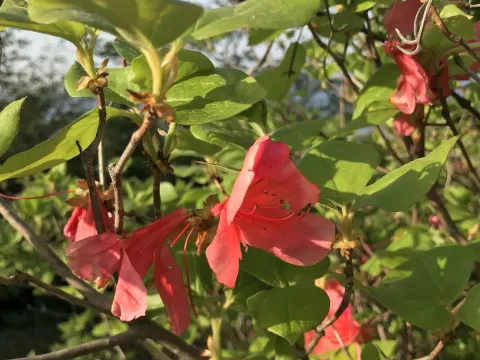
Weyrich's rhododendron
Rhododendron weyrichii
Rhododendron weyrichii is a deciduous shrub belonging to the Ericaceae family, native to the mountainous regions of Japan and Korea. It is highly prized by collectors for its stunning early spring bloom.
What the section contains
Weyrich's rhododendron
The plant requires acidic, well-draining soil rich in organic matter. Soil pH levels should be maintained between 4.5 and 5.5 to ensure proper nutrient absorption and plant health.
When selecting a site, provide partial shade to protect the foliage from harsh midday sun. Wind protection is essential to prevent drying out and damage to the branches during winter.
Cultural practices include regular mulching with pine needles or bark to retain soil moisture and regulate temperature. This practice mimics the natural forest floor environment.
In landscaping, it serves as an excellent feature plant. Its upright growth habit and beautiful coloration make it ideal for woodland gardens and mass plantings in acid-soil landscapes.
Common fungal diseases such as Phytophthora root rot are primary threats. These pathogens thrive in poorly drained soils and can quickly compromise the plant's health.
Pests like lace bugs and spider mites are frequent invaders. They feed on the sap and foliage, leading to discoloration and a decline in the shrub's overall vigor.
Effective management involves consistent monitoring and the application of integrated pest management strategies, including biological or chemical treatments when necessary.
To reduce disease pressure, maintain proper spacing between plantings to encourage airflow and prevent moisture buildup on leaves.
Sanitation practices, such as removing fallen leaves and pruning away deadwood, are crucial to preventing the overwintering of pests and spores near the plant.